
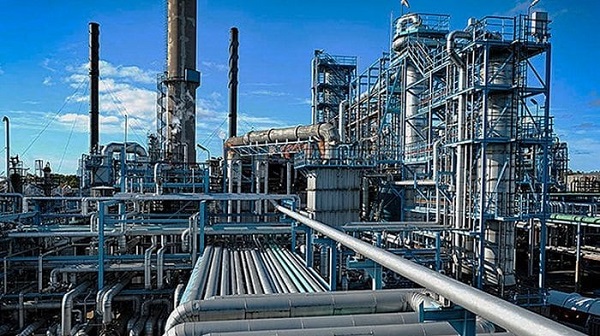

Ghana’s principal petroleum processing installation, the Tema Oil Refinery, has initiated an expansive technical transformation intended to significantly amplify its productive capability, signalling a renewed institutional commitment to restoring the refinery’s strategic relevance within the nation’s energy architecture. The initiative forms part of a broader operational revitalisation agenda designed to strengthen industrial performance, heighten refining efficiency and reinforce the refinery’s contribution to Ghana’s petroleum economy.
At present, the facility is engaged in a series of complex engineering procedures directed toward enlarging its crude oil processing capacity from approximately twenty eight thousand barrels per stream day to an anticipated forty five thousand barrels per stream day. This projected enhancement represents a substantial escalation in throughput and reflects ongoing efforts by management and technical specialists to reposition the refinery as a more formidable participant in the domestic fuel supply chain.

The capacity enlargement constitutes a central component of a wider recovery programme intended to rejuvenate the ageing infrastructure of the refinery and restore its operational dynamism after years of fluctuating activity. Within Ghana’s broader petroleum landscape, the refinery has historically served as a critical node for the transformation of imported crude into refined products such as petrol, diesel, liquefied petroleum gas and other petroleum derivatives that sustain industrial activity, transportation networks and household energy needs across the country.

According to officials familiar with the modernisation effort, the anticipated rise in output will be achieved through the incorporation of an additional refining component identified as the F61 processing unit. This newly introduced installation will function concurrently with the refinery’s existing F1 processing unit, thereby expanding the facility’s technical configuration and enabling a more robust processing cycle.

Both units are scheduled to interface directly with the refinery’s crude distillation infrastructure, which represents the central mechanism through which raw petroleum is separated into its various refined fractions. By synchronising the new unit with the existing distillation framework, engineers expect to achieve greater operational efficiency, improved energy utilisation and a significant rise in overall production volumes.
Management has indicated that refining activities have continued steadily since the facility resumed operational output, with engineering teams presently navigating a sequence of transitional technical stages required to integrate the additional unit seamlessly into the refinery’s complex processing system. These stages involve calibration of mechanical equipment, alignment of process control mechanisms and synchronisation of pressure and temperature parameters that govern the distillation process.

Once the integration procedure reaches completion, refinery administrators anticipate that daily refining throughput will increase markedly from the current operational level of roughly twenty eight thousand barrels per stream day to an estimated forty five thousand barrels per stream day. Energy sector analysts note that such an increase would strengthen Ghana’s ability to refine petroleum domestically and could reduce partial reliance on imported refined fuel products.
The refinery currently functions within a commercial arrangement widely known in the petroleum industry as toll refining. Under this operational model, privately owned oil trading firms supply crude petroleum to the refinery, which subsequently processes the raw resource into finished petroleum products on behalf of the suppliers.

Through this arrangement the refinery receives a processing remuneration for converting the crude oil into usable fuels, while ownership of the refined output remains with the private entities that delivered the crude feedstock. The companies responsible for supplying the crude subsequently assume responsibility for marketing, distribution and commercial sale of the finished petroleum products within domestic or regional markets.

Insights into these developments were provided by Godwin Mahama Ayaba, Corporate Affairs Officer of the refinery, during a broadcast conversation with journalists on Citi FM on Monday, March 9. During the interview he offered a detailed explanation of the refinery’s operational arrangements and its ongoing efforts to expand technical capacity.
Mr Ayaba explained that within the toll refining framework the refinery itself does not determine how the refined fuels are distributed or marketed once production is completed. Instead, those commercial decisions remain entirely within the authority of the crude suppliers who commission the processing services of the facility.
He further clarified that the refinery’s present design capacity stands at approximately twenty eight thousand barrels per stream day. However, the activation of the F61 unit will elevate the facility’s operational capability to roughly forty five thousand barrels per stream day, a development that management believes will strengthen efficiency and improve utilisation of the refinery’s technical infrastructure.
Looking beyond the immediate upgrade, Mr Ayaba revealed that refinery administrators are also examining longer term expansion possibilities that could raise total throughput to nearly sixty thousand barrels per stream day within the medium term. Such an expansion would require additional engineering investment, upgrades to supporting infrastructure and the acquisition of further processing equipment capable of handling increased crude volumes.
Energy economists observe that revitalising the refinery carries broader strategic implications for Ghana’s economic resilience. A stronger domestic refining capability has the potential to stabilise fuel supply, reduce foreign exchange pressures associated with large scale imports of refined petroleum products and support the development of a more integrated national petroleum value chain.
For decades the refinery has remained a central yet often challenged component of Ghana’s downstream petroleum industry. The current capacity expansion initiative therefore represents not merely a technical upgrade but a symbol of renewed ambition to restore the facility’s prominence within West Africa’s evolving energy landscape.

