
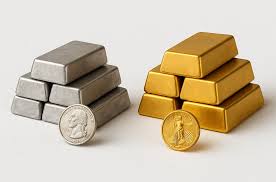

As 2025 draws to a close, global precious metals markets have experienced a sharp pullback, with gold and silver prices falling noticeably after reaching record highs earlier in the month. The downturn has been driven by a combination of investor profit-taking, changes in futures trading requirements, and thinner year-end market activity, all of which tend to amplify price movements during the final trading days of the year.
Despite the sudden correction, analysts stress that the broader outlook for precious metals remains positive, with prices still sitting well above their levels from a year ago.

Sharp Declines After Record Highs
During the final trading sessions of December, gold and silver experienced steep losses. On Monday, December 29, U.S. gold futures fell by roughly 4.5%, while silver suffered a much steeper drop of about 8.7%, marking its sharpest single-day decline in nearly five years.

The scale of the pullback surprised many traders, especially after both metals had surged to record or near-record levels earlier in the month. Silver, in particular, had enjoyed a powerful rally throughout 2025, making it more vulnerable to abrupt corrections once momentum began to fade.

Margin Hikes Trigger Market Adjustments
A key trigger for the downturn was a decision by the Chicago Mercantile Exchange (CME) to increase margin requirements on precious metals futures contracts. This change required traders to deposit more cash to maintain their positions, effectively reducing leverage across the market.
Such adjustments are often introduced after periods of extreme price volatility to limit risk. However, they also tend to force investors to reduce exposure quickly, leading to rapid sell-offs—especially among speculative traders.

Profit-Taking and Thin Year-End Trading
Another major factor behind the pullback was widespread profit-taking. After months of strong gains — with gold rising sharply and silver more than doubling at certain points during the year — many investors chose to lock in profits before year-end.
This behavior is common during December, when institutional investors rebalance portfolios and trading volumes typically decline due to the holiday season. Lower liquidity often magnifies price swings, making markets more sensitive to large orders.

What Drove Prices Up Earlier in the Year?
Earlier in 2025, gold and silver were supported by several strong tailwinds:

-
Expectations that the U.S. Federal Reserve would begin cutting interest rates
-
A weakening U.S. dollar, which makes dollar-priced commodities more attractive globally
-
Strong industrial demand, particularly for silver
-
Rising geopolitical tensions that increased demand for safe-haven assets
Together, these factors pushed both metals to historic highs before momentum cooled toward year-end.
Long-Term Outlook Remains Constructive
Despite the recent correction, analysts widely agree that the broader fundamentals for precious metals remain intact. Prices are still significantly higher than they were a year ago, suggesting that the recent decline may represent a market reset rather than a long-term downturn.
Looking ahead to 2026, investors will closely monitor signals from central banks, including the Bank of Ghana, particularly on interest rate policy and inflation control. Such decisions will influence the appeal of non-yielding assets like gold and silver.
Implications for Ghana and Global Markets
For Ghana, one of Africa’s leading gold producers, sustained strength in gold prices remains economically significant. In addition, growing industrial use of silver — especially in renewable energy, electronics, and solar technology — could continue to underpin long-term demand.
While short-term volatility may persist, underlying structural factors such as industrial expansion, technological growth, and strategic demand for precious metals suggest that gold and silver are likely to remain key components of global commodity markets.