
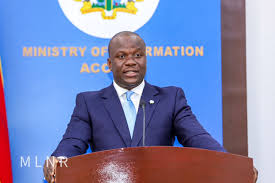

The Member of Parliament for Damongo and former Minister for Lands and Natural Resources, Samuel Abu Jinapor, has issued a blunt warning to Ghanaians to abandon the culture of idolising political leaders, describing the practice as dangerous to democratic accountability and civic equality.
Speaking on Joy FM’s Super Morning Show on Monday, December 22, Mr Abu Jinapor argued that the growing tendency to elevate politicians to near-royal status weakens democracy by discouraging scrutiny, criticism, and citizen oversight. According to him, democracy thrives only when leaders are constantly reminded that they are servants of the people, not superior beings entitled to unquestioned loyalty.

He noted that this mindset remains deeply embedded in Ghanaian society and requires a deliberate shift in public consciousness. In his view, citizens themselves must take responsibility for dismantling attitudes that place politicians above ordinary people.

Drawing comparisons with advanced democracies, Mr Abu Jinapor explained that while respect for public office is essential, it must not descend into blind reverence or sycophancy.

“In developed democracies, if you attend a meeting as a minister and you are engaging with a subordinate or a civil servant, there is courtesy and professionalism, but there is no excessive flattery or servility,” he said. “Our society, however, is structured in a way where we almost transfer the reverence we reserve for our chiefs and kings onto political leaders—and that is unhealthy.”
He stressed that Ghana’s traditional system of honouring chiefs and monarchs should not be conflated with modern democratic leadership, where authority flows from the people through elections, not lineage or divine entitlement.

Mr Abu Jinapor was emphatic that elected officials, including the President and ministers, are fundamentally employees of the citizenry. Their power, he said, is delegated, conditional, and subject to public accountability.
“Political leaders are your employees. The employers are the people,” he stated. “The citizens employ the President, his government, and all officials within that government.”

While acknowledging the importance of decorum and respect for high office, he warned against mistaking respect for submission. According to him, honouring public office should never prevent citizens from questioning decisions, demanding transparency, or holding leaders accountable for their actions.

“There is nothing wrong with respecting high office,” he said. “But we must also be bold and courageous enough not to treat political leaders as chiefs or kings. They are public servants and should be seen and approached as such.”
Mr Abu Jinapor’s comments come amid ongoing national debates about political power, governance culture, and citizen responsibility in Ghana’s democracy. His remarks serve as a broader call for civic maturity, urging Ghanaians to replace political idol worship with active citizenship, critical engagement, and democratic vigilance.
According to him, until citizens fully embrace their role as employers rather than subjects, true accountability in governance will remain elusive.

