
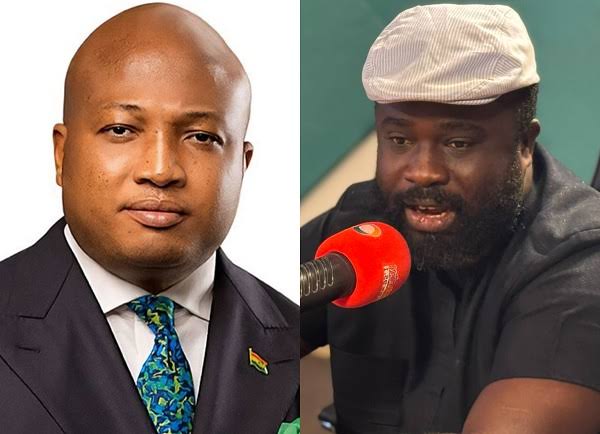

Foreign Affairs Minister Samuel Okudzeto Ablakwa has instituted a defamation lawsuit against New Patriotic Party (NPP) communications team member Benjamin Gyewu-Appiah, popularly known as Benghazi, and Media General Ghana Limited over allegations linking him romantically to Ghanaian musician Fantana and accusing him of diverting public funds.
The legal action follows remarks made by Benghazi during a discussion on Onua FM on October 14, 2026, in which he alleged that the Foreign Affairs Minister was romantically involved with the musician and had channelled money allegedly misappropriated from public resources to her.

During the broadcast, the NPP communicator made a series of allegations against Mr Ablakwa, claiming that the minister had given Fantana money he had allegedly taken unlawfully and predicting that both the minister and his wife would face imprisonment.

The statements generated considerable public attention, particularly because they involved allegations concerning the minister’s private life and the alleged misuse of public funds.

A writ of summons issued by the High Court of Justice in Accra on October 30, 2026, identifies Mr Ablakwa as the plaintiff, while Benghazi and Media General Ghana Limited, the owners and operators of Onua FM and Onua TV, are named as defendants.
The court process was initiated under Order 2 Rule 3(1) and directs the defendants to enter an appearance within eight days of receiving the writ, with the date of service included in the calculation.

The summons further warns that failure to comply with the requirement could result in the court proceeding to enter judgment against the defendants in their absence and without issuing any further notice.
The controversy surrounding the broadcast also attracted a reaction from Fantana, who reportedly expressed strong displeasure over the claims associating her with the minister and the alleged transfer of public funds.

Meanwhile, following the commencement of the legal proceedings, Media General Ghana Limited has issued a retraction and apology through Onua FM, the broadcasting platform on which the disputed remarks were made.

The development introduces a significant legal dimension to the controversy, placing both the individual who made the allegations and the media organisation that broadcast them before the court.
The case will provide an opportunity for the parties to address the disputed statements through the appropriate judicial process. However, the filing of the lawsuit does not itself establish liability or determine whether the allegations were defamatory, as those questions remain subject to the court’s consideration.

