
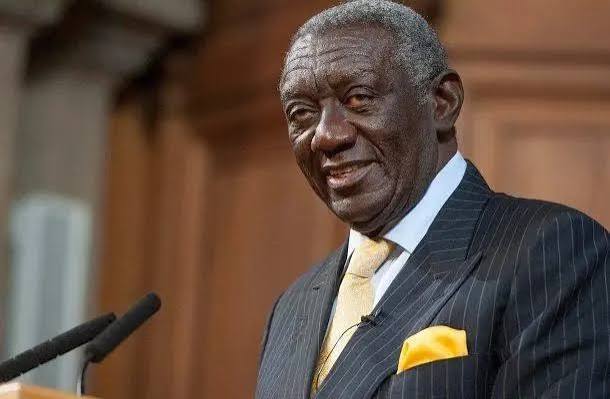

Former President John Agyekum Kufuor has thrown his support behind a proposal to extend Ghana’s presidential term from four years to five, arguing that the additional year would give successive governments greater opportunity to implement their policies and complete development projects.
In an exclusive interview with JoyNews journalist Evans Mensah, Mr Kufuor maintained that the existing four year arrangement placed considerable pressure on governments to deliver on their campaign promises while simultaneously preparing for another general election.

According to the former President, extending the presidential tenure to five years would provide a more realistic period for executing development programmes, with the final year reserved largely for election campaigns and the process of seeking a renewed mandate from the electorate.

“Four years is too short for a young nation that is trying to develop,” he said, emphasising the need to reconsider the current constitutional arrangement in light of Ghana’s development priorities.

Mr Kufuor explained that the existing system effectively reduces the time available for meaningful governance because political activities intensify as the next election approaches. He argued that the fourth year of a presidential term is often dominated by campaigning, political promises and efforts by parties to secure electoral support rather than sustained attention to development initiatives.
He questioned the practical benefits of maintaining the present arrangement, observing that governments must contend with growing election related pressures during a period when they should be consolidating the achievements of their administrations.

The former President suggested that a five year term would allow governments to concentrate on their development agenda for four years before entering the final year, when politicians could focus more extensively on campaigning for the next election.
Mr Kufuor also dismissed suggestions that his support for the proposal was motivated by a desire to extend the period a president could remain in office. He stressed that he continued to support the constitutional principle of limiting presidents to two terms, while maintaining that four years for each term was inadequate for a developing country such as Ghana.

“I believe in the two terms, but four years for a developing young country like ours, and I have gone through the experience, so I spoke from practical experience,” he explained.

He recalled that he raised the issue during his final State of the Nation Address, insisting that his position was informed by his experience in government rather than any personal political ambition.
Mr Kufuor’s endorsement comes despite resistance to the proposed extension from the New Patriotic Party, the political organisation to which he belongs. Nevertheless, he maintained that the party was entitled to its own position on the matter, even if it differed from his personal assessment.
“Now I say five years, if for whatever reason my party says no, that is their point of view,” he stated.
The proposal is part of Ghana’s ongoing constitutional review discussions and would require the necessary constitutional processes to be completed before any change could take effect. It has not yet received the requisite parliamentary approval and presidential assent to become law.
The debate has increasingly focused on whether extending the presidential term would enable governments to implement policies more effectively, complete major infrastructure projects and pursue long term development objectives without the disruption associated with frequent election campaigns.
Supporters of the proposed change argue that an additional year could improve policy continuity and provide more time for measurable results, while the broader constitutional debate raises questions about the appropriate balance between effective governance, democratic accountability and the electorate’s opportunity to periodically renew or withdraw its mandate.

