

Ghana will launch their 2027 Africa Cup of Nations qualification campaign against Côte d’Ivoire in Bouaké on Thursday, September 24, in a high profile West African encounter that brings together two former continental champions with a long and compelling competitive history. The Group C fixture will begin at 7:00 p.m. Ghana time at the Stade de la Paix in Bouaké.
The meeting carries additional significance because the two countries’ most recent competitive confrontation came in the 2015 Africa Cup of Nations final in Bata, Equatorial Guinea. After 120 minutes without a goal, Côte d’Ivoire defeated Ghana 9 to 8 on penalties to secure the continental championship and end a 23 year wait for the Elephants to lift the trophy.

That memorable final was overseen by French coach Hervé Renard, who guided Côte d’Ivoire to the title in 2015. More than a decade later, Renard has returned to the Ivorian technical area for a second spell and will once again encounter Ghana in a major Africa Cup of Nations assignment.

Renard has begun his latest tenure by reshaping the Elephants, introducing eight new players into his 25 man squad as he establishes a new phase for the national team. The newcomers include Patrick Zabi, Eddy Doué, Amadou Koné, Malick Yalcouyé, Christ Tapé and Kassoum Ouattara, together with forwards Yann Gboho and Rayan Fofana.

The Ivorian coach will nevertheless have an experienced core at his disposal, including goalkeeper Yahia Fofana, defender Ousmane Diomande and midfield leader Franck Kessié. Manchester United winger Amad Diallo, however, is unavailable because of injury.
For Ghana, Thursday’s contest represents the beginning of another attempt to regain a place among Africa’s leading football nations after the Black Stars failed to qualify for the 2025 Africa Cup of Nations. Ghana finished at the bottom of their previous qualifying group after recording three defeats and three draws against Angola, Sudan and Niger.

Head coach Carlos Queiroz has therefore been tasked with steering the Black Stars through a new continental qualification campaign, and the opening assignment presents an immediate examination against the reigning 2023 African champions.
Ghana’s preparations have, however, been complicated by player availability issues. Several members of the original squad have been affected by injuries or fitness concerns, while Mohammed Kudus, who had returned to the squad following a lengthy injury absence, subsequently withdrew. Nathaniel Adjei, Jan Gyamerah and Prince Kwabena Adu have also been affected by injury related setbacks.

Those developments have compelled Queiroz to adjust his plans and introduce additional players, including Jonas Adjetey, Alidu Seidu, Brandon Thomas Asante, Mohammed Fuseni, Rahim Ibrahim and Ebenezer Annan. The Portuguese coach has nevertheless expressed confidence in the players available to him.

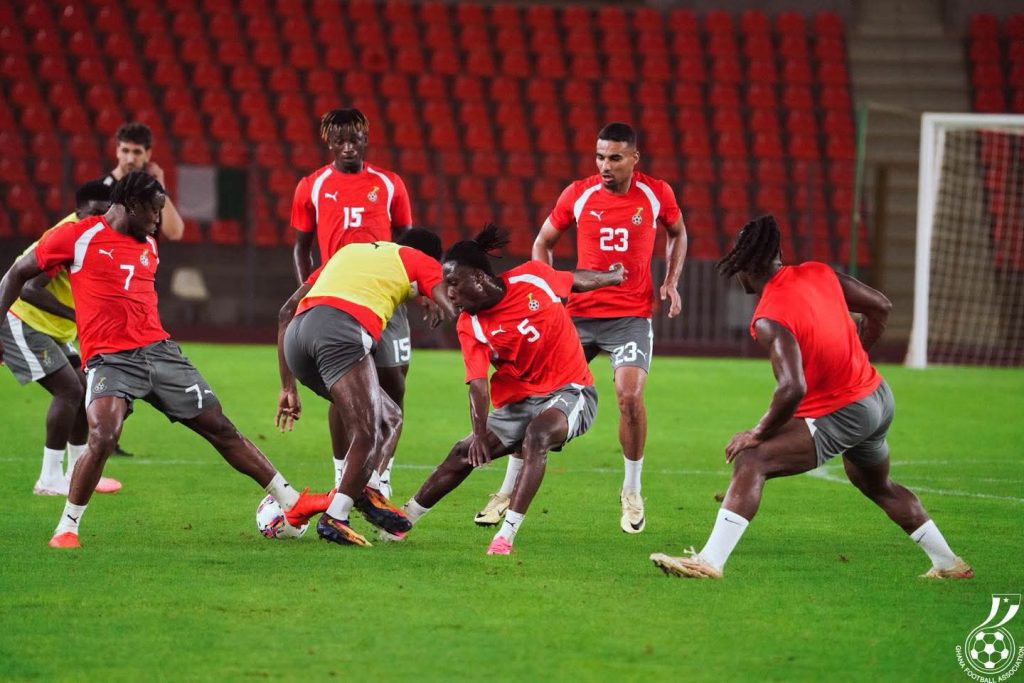
The Black Stars have already reached Bouaké, travelling from Accra on a Ghana Air Force flight before being welcomed by Ghana’s High Commissioner to Côte d’Ivoire, members of the Ghanaian community and representatives of the media. The team was scheduled to conduct its final official training session at the Stade de la Paix before completing preparations for the encounter.
Queiroz has made it clear that Ghana are travelling to Côte d’Ivoire with a competitive objective rather than merely to assess players. Speaking ahead of the fixture, the coach said the team possesses considerable potential and that the players selected for national duty are expected to perform at the highest level.
The Ghanaian side will consequently have to cope with the pressure of playing away from home against an Ivorian team expected to enjoy substantial support inside the Stade de la Paix.
Côte d’Ivoire, meanwhile, will seek to exploit its home advantage and begin the qualification process with a strong result under Renard. The encounter is also the first competitive examination of his second tenure since returning to the Elephants.
The significance of the fixture extends beyond the two teams themselves because both nations are competing in Group C alongside The Gambia and Somalia. Ghana will face The Gambia in Accra on September 29, while Côte d’Ivoire will subsequently meet Somalia in Abidjan.
The opening two rounds of matches therefore provide the four nations with an early opportunity to establish their positions within the qualifying group, making the result in Bouaké particularly important to the opening phase of the campaign.
The tactical contest is expected to demand considerable discipline from Ghana, particularly in defensive organisation and transitions from defence into attack. Côte d’Ivoire possess technically accomplished and physically powerful players, while Ghana will seek to remain compact, exploit opportunities in transition and make the most of their chances in front of goal.
For Renard, the fixture offers a return to one of the most familiar opponents from his earlier period with Côte d’Ivoire. For Ghana, it represents another opportunity to begin rebuilding their continental campaign after the disappointment of missing the previous AFCON tournament.
The historical connection between the two sides will inevitably add another layer to Thursday’s encounter, particularly because the 2015 final remains the last competitive meeting between Ghana and Côte d’Ivoire. Yet the circumstances have changed considerably, with new squads, new personnel and different coaching arrangements shaping the latest chapter of the rivalry.
What remains unchanged is the importance of the contest. Both sides enter the new qualifying cycle seeking to establish themselves immediately, while Ghana will attempt to secure a positive opening result away from home and Côte d’Ivoire will look to convert home advantage into a strong start.
The Côte d’Ivoire versus Ghana encounter is scheduled for 7:00 p.m. GMT on Thursday, September 24, 2026, at the Stade de la Paix in Bouaké, marking the opening Group C fixture for both nations on the road to the 2027 Africa Cup of Nations.

