
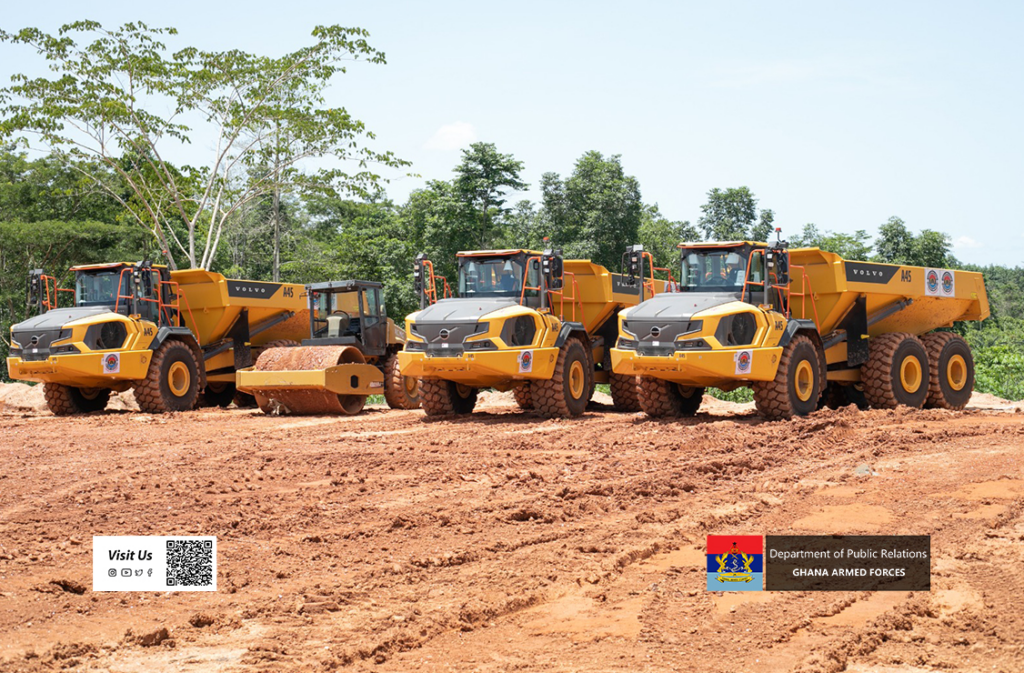

Questions are increasingly being raised about the equipment used by the Engineers Regiment of the Ghana Armed Forces (GAF) to clear the right-of-way for the Accra–Kumasi Expressway—and, more importantly, about the ownership, procurement and cost of that equipment.
Government has announced that the GAF completed the clearing of 175.6 kilometres of the proposed expressway corridor, from Ablekuma in the Greater Accra Region to Sewua in the Ashanti Region, in 19 weeks—one week ahead of the 20-week deadline. The work involved clearing dense vegetation and difficult terrain and was described by Government as a critical pre-construction activity.

But the speed and scale of the operation raise a perfectly legitimate question: what equipment did the Engineers Regiment deploy to accomplish such a formidable task, and where did that equipment come from?

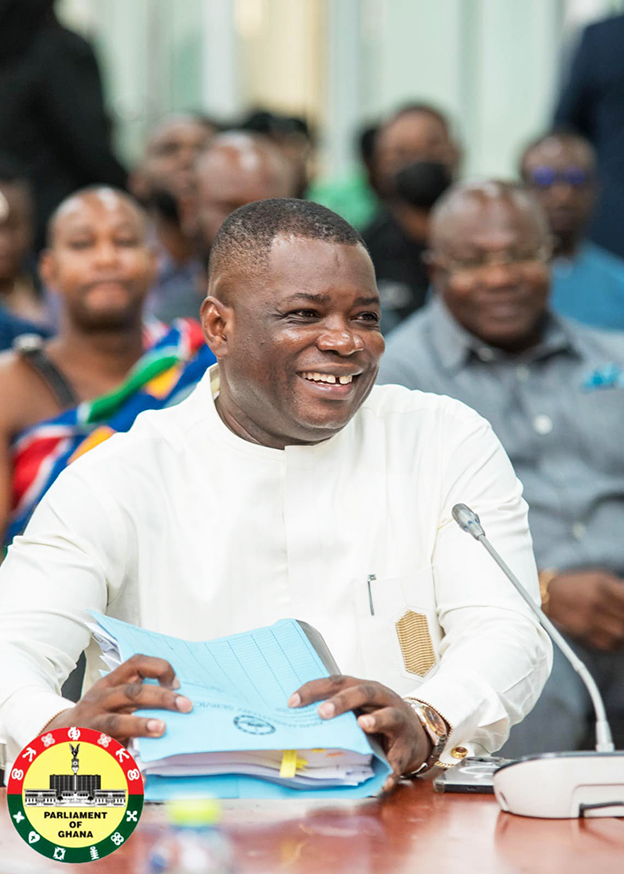
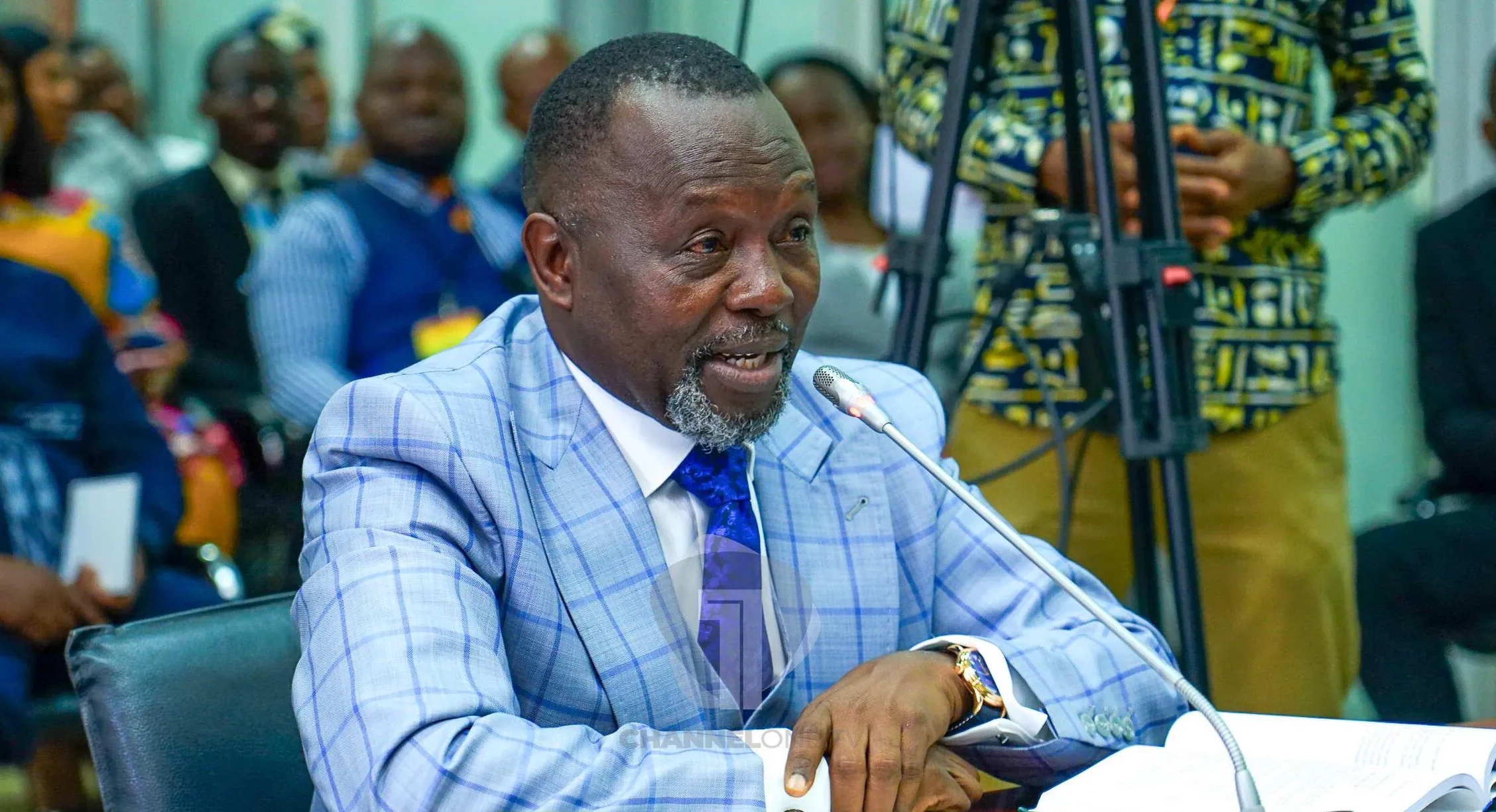


The few photographs publicly available from the operation appear to show heavy earthmoving machinery of the kind commonly used in large-scale road construction and surface-mining operations. That observation, by itself, does not establish that the machines belonged to private mining companies. Indeed, the GAF has its own engineering capability, and the United States Embassy donated three heavy-duty trailer heads to the GAF Engineer Training School in June 2026 specifically to transport heavy machinery, including road graders, backhoes and front-end loaders. The GAF said the equipment would support major projects including the Accra–Kumasi Expressway.

Nevertheless, the GAF itself indicated in April that its operation involved four work gangs operating day and night, with “most equipment” already on site and funding secured. At that stage, 17.75 kilometres had been cleared during mobilisation. By July, the GAF reported that 108 kilometres—about 61 per cent of the clearing assignment—had been completed. The operation ultimately involved about 78 military engineers drawn from the 48, 49, 50 and 51 Engineer Regiments and the Engineer Training School, supported by logistics and administrative personnel and working in three shifts.
The scale of that mobilisation therefore makes the equipment question more, rather than less, important. If the machines were wholly owned by the Ghana Armed Forces, the public deserves to know which GAF equipment fleet was deployed. If some were hired, borrowed, leased or otherwise obtained from private companies, the identity of those companies, the terms of acquisition and the financial obligations arising from the arrangement become matters of legitimate public interest.

And this is where the larger financial question arises.
The Controller and Accountant-General’s Department has stated that the funds transferred to Accra–Kumasi Expressway Limited—the Government-owned special purpose vehicle established through the Ghana Infrastructure Investment Fund—were not used to finance the GAF’s right-of-way clearing. CAGD said the clearing was a separate preparatory activity and that the project funds remained in a dedicated Bank of Ghana account pending execution of the project.

That explanation makes the question of the clearing operation’s own financing unavoidable. If the principal project funds did not finance the clearing, who paid for the machinery, fuel, transportation, maintenance, operators, spare parts and other logistical requirements associated with 19 weeks of intensive work across three regions?

The Daily Searchlight has been asking related questions about the institutional and corporate structure behind the Accra–Kumasi Expressway. Government has publicly identified Accra–Kumasi Expressway Limited (AKEL) as the special purpose vehicle established under GIIF to undertake the development, financing, construction, operation and maintenance of the project. Parliament adopted the Roads and Highways Committee’s report on the concession agreement between Government and AKEL in December 2025.
But the corporate identity of the project vehicle and the identity of any company that may have supplied equipment for the GAF’s preparatory works are two separate questions. The latter has not, so far as the public record reviewed by The Daily Searchlight shows, been adequately disclosed.
And so the questions remain:
Who owned the heavy equipment used in clearing the 175.6-kilometre corridor?
If any of the equipment was privately owned, which company or companies supplied it?
Was the equipment hired, leased, loaned or provided under a subcontract?
What was the financial value of that arrangement, and who authorised and paid for it?
These are not questions about whether the Ghana Armed Forces successfully completed its assignment. Government’s own records establish that the Engineers Regiment completed the 175.6-kilometre clearing exercise in 19 weeks, ahead of schedule.
They are questions about public accountability.
If the equipment belonged entirely to the GAF, the records should be capable of showing it. If private equipment was used, the public should be able to know the supplier and the contractual or financial arrangement under which it was made available.
For a project now presented as one of the largest infrastructure undertakings in Ghana’s history, the public should not have to guess who supplied the machines that opened the road to its construction.

