
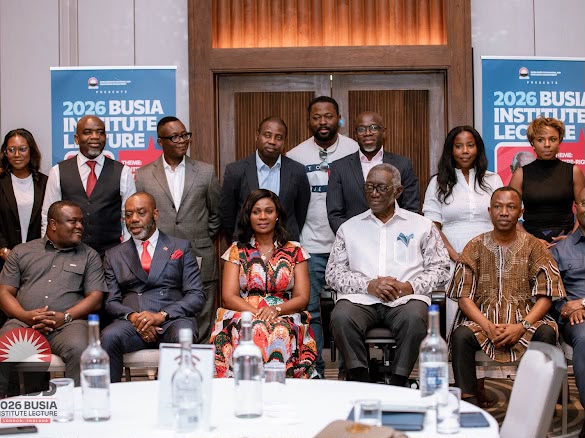

2026 Busia Institute Lecture | London Hilton on Park Lane | Sunday, 9 August 2026
Dr Matthew Opoku Prempeh says political opposition should be recognised as an act of patriotism when it is grounded in truth, ideas and credible alternatives rather than obstruction for its own sake.

He said Ghana’s democratic development required political parties to see themselves as institutions of ideas and public service, not simply vehicles for securing office.

Dr Prempeh made the remarks while delivering the keynote address at the 2026 Busia Institute Lecture at the London Hilton on Park Lane on Sunday. The lecture was held under the theme, “Centre-Right Political Thought in Africa: The Ghanaian Experience.”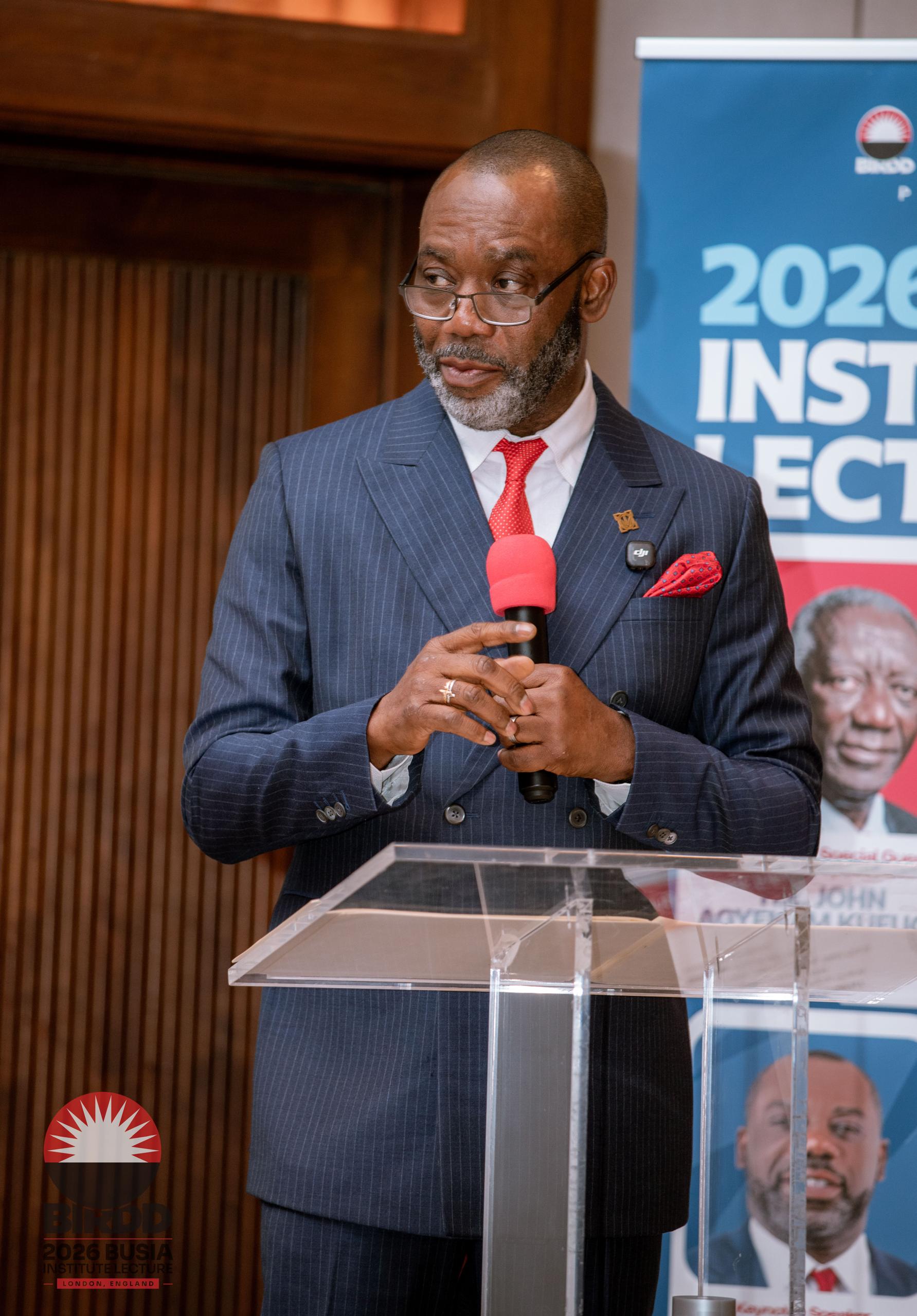

“A political party earns its place not by winning offices, but by becoming an institution of memory, of ideas and of honest leadership,” he said.
The keynote speaker argued that the political heritage associated with Paa Grant, J.B. Danquah, S.D. Dombo, Professor K.A. Busia, John Agyekum Kufuor and others imposed obligations on those who claimed it today. Its good name, he said, was neither permanent nor automatic and could be re-earned or squandered by each generation.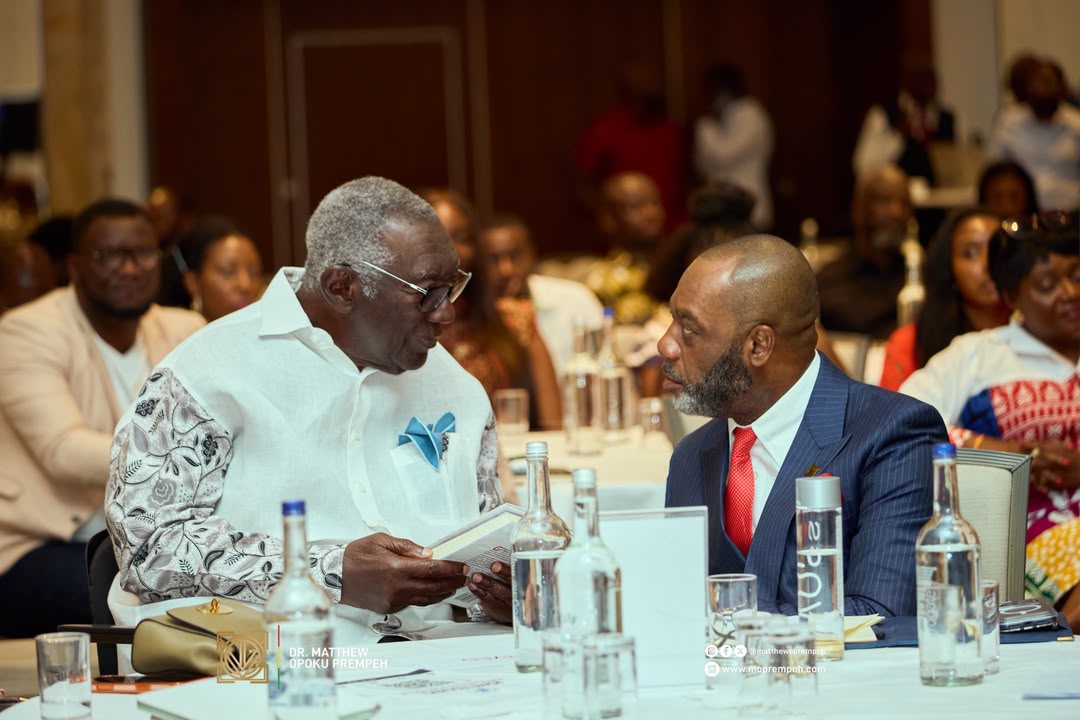

Dr Prempeh said loyalty to a political tradition did not require the suppression of uncomfortable history. He called for a balanced assessment of the Second Republic and said the Busia administration should be judged by its constitutional philosophy, development record and shortcomings rather than by the military coup that removed it.
He said the administration restored constitutional government after military rule and pursued rural development, education, indigenous participation in the economy, decentralisation and private enterprise. He rejected the coup as a legitimate political verdict, arguing that the government had been denied the opportunity to submit itself to the electorate.

Dr Prempeh also addressed the 1969 Aliens Compliance Order, describing the human consequences of its implementation as a “wound”. “Belonging to a tradition does not oblige me to flatter it,” he said, insisting that achievement and error had to be acknowledged together.

Former President John Agyekum Kufuor, who addressed the lecture as Life Patron of the Busia Institute, similarly warned against political exclusiveness. He said public office was temporary and urged political actors to defend Parliament, the judiciary, the media and independent constitutional institutions.
“An opponent remains a fellow citizen, and a temporary majority does not own the republic,” Mr Kufuor said.
Bernard Owusu, who chaired the lecture, said democratic practice could not be reduced to periodic elections. He argued that strong institutions were needed to restrain excesses, protect rights and freedoms, uphold the rule of law and serve the public interest.
“Democracy is not simply about elections,” Mr Owusu said. “It is about values, habits, discipline, citizenship, tolerance and respect for the rule of law.”
Dr Prempeh brought the argument back to the present, saying the tradition had to offer serious answers to youth opportunity, technology, modern agriculture, inequality and the performance of public institutions. He also urged the Ghanaian diaspora to contribute expertise, investment networks and institutional knowledge as well as remittances.
Dr Anane Agyei, Executive Director of the Busia Institute, said the lecture was intended to examine political thought through evidence rather than personalities. Political traditions, he said, should be judged by the ideas they defended, the institutions they built and their consequences for citizens.
The first Busia Institute Lecture held outside Ghana attracted diplomats, Members of Parliament, Ghanaian professionals, members of the diaspora and other invited guests.

