
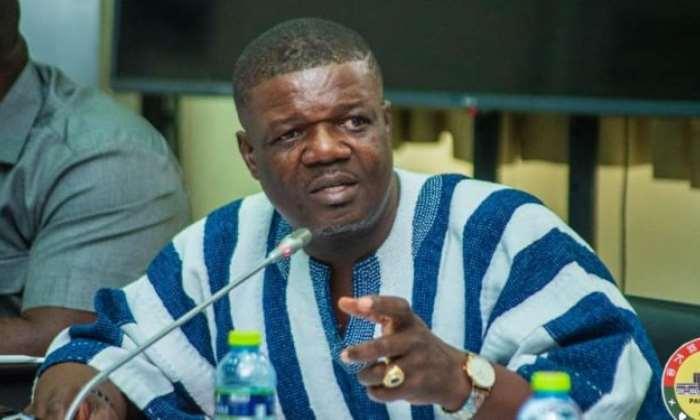

Majority Chief Whip and South Dayi Member of Parliament, Rockson Nelson Dafeamekpor, has expressed strong reservations about the arrest and detention of individuals over remarks considered insulting to the government or public officials, cautioning that such actions could ultimately undermine rather than strengthen the administration.
Mr Dafeamekpor acknowledged that disrespectful and offensive statements directed at public officials were inappropriate and ought not to be promoted. Nevertheless, he argued that such utterances should not automatically be interpreted as a serious threat to the government or become sufficient grounds for arrest and detention.

The South Dayi legislator said he was particularly disturbed by some of the recent arrests, stressing that the actions could generate avoidable political controversy and create difficulties for an administration that should instead remain focused on delivering on its electoral commitments.

According to him, some of the arrests may not necessarily have been authorised by the government itself, suggesting that decisions taken by the police could nevertheless have wider political consequences for the administration.

“I am upset by some of these arrests; it hurts the government. Sometimes government doesn’t even sanction them; it’s the police,” he said during an interview with TV3.
Mr Dafeamekpor therefore called on the government to pay greater attention to the manner in which state institutions respond to political criticism and public commentary, particularly at a time when questions about democratic freedoms and tolerance of dissent are attracting renewed national attention.

He maintained that detaining people because of their political expressions could unintentionally create the perception that the government is unwilling to tolerate criticism, disagreement or opposing viewpoints.
“I think that as government, we must pay attention to some of these things; it doesn’t help. These things don’t detract from the government in any way, so they should allow the people to speak,” he stated.

The Majority Chief Whip further urged the administration to concentrate its attention on fulfilling the mandate entrusted to it by the Ghanaian electorate rather than becoming embroiled in controversies arising from politically charged comments.

“Let’s focus on our mandate and deliver. As a government, we don’t want this at all. Arresting people and confining them, it doesn’t help us. That is my disclaimer,” he said.
His position reflects a broader argument that while individuals should remain responsible for the language they use in public discourse, the state must exercise considerable restraint before resorting to coercive measures against political expression. Mr Dafeamekpor emphasised that offensive speech could be criticised or condemned without necessarily requiring the involvement of law enforcement agencies.
His comments have assumed particular significance amid renewed national discussions about freedom of expression, political tolerance and the conduct of state institutions following the New Patriotic Party’s Democracy Under Attack demonstration held on Thursday, August 6, 2026.
The opposition party said the demonstration was organised to draw public attention to concerns surrounding the rule of law, constitutional governance and democratic accountability. The NPP has also accused the government of political persecution, selective application of justice and the misuse of state institutions, allegations that the government has rejected.
The latest intervention by Mr Dafeamekpor consequently places renewed emphasis on the need for government institutions to distinguish between genuinely threatening conduct and political speech that may be provocative, offensive or unpopular but does not necessarily constitute a threat to public order or national security.
The legislator’s warning also reinforces the importance of preserving space for criticism within Ghana’s democratic system, particularly when political disagreements become increasingly intense. His central argument is that the government is more likely to protect its credibility by demonstrating tolerance, restraint and confidence in democratic debate than by allowing arrests over political utterances to become a recurring feature of public discourse.

