
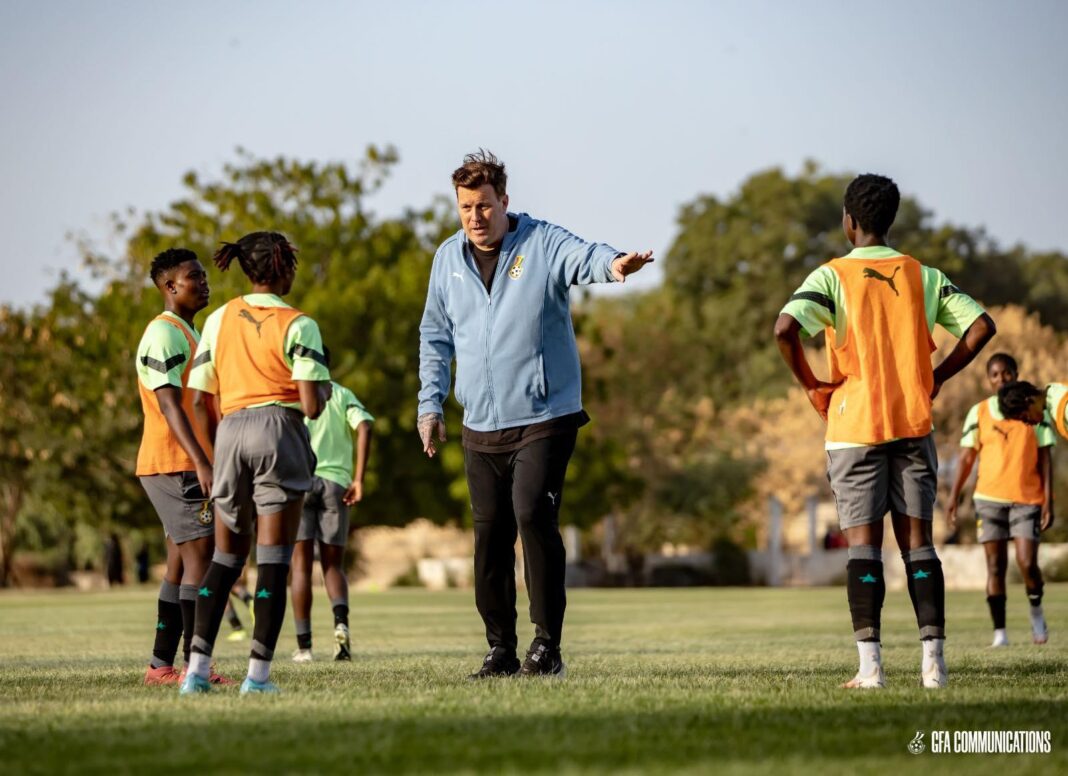

Head coach Kim Lars Björkegren has acknowledged that Ghana’s spirited second half resurgence against Cameroon arrived too late to prevent defeat, after the Black Queens suffered a narrow 1 nil loss in their second Group D fixture at the 2026 Women’s Africa Cup of Nations, leaving their qualification hopes hanging in the balance ahead of a decisive final group encounter with Mali.
The setback marked Ghana’s first defeat of the continental championship after a first half penalty separated the two sides in a fiercely contested encounter. The result has significantly intensified the battle for qualification from Group D, with the Black Queens now requiring victory over Mali in their final group match to maintain realistic hopes of advancing to the knockout phase of Africa’s premier women’s football competition.

Cameroon secured the decisive breakthrough after the referee awarded a penalty following an extended review by the Video Assistant Referee system. Although the Black Queens mounted a determined response during the closing stages and believed they had rescued an equaliser, their celebrations were cut short when the goal was ruled out for offside, leaving Ghana to endure a painful defeat despite an encouraging late rally.

Assessing the performance after the final whistle, Björkegren admitted that his players struggled to match Cameroon’s physical intensity and competitiveness throughout the opening period. According to the Swedish tactician, Ghana consistently found itself second best in key challenges, allowing the Cameroonians to dominate crucial moments across the pitch.

He explained that his side repeatedly lost individual battles, not only failing to win the initial contests for possession but also surrendering the subsequent phases of play. As a result, Ghana spent much of the first half reacting to Cameroon’s aggressive approach instead of imposing its own tactical identity upon the contest.
Beyond the physical battle, the Black Queens manager also expressed disappointment with his team’s execution in possession, revealing that Ghana abandoned important aspects of the tactical plan that had been prepared before the match. He observed that the players relied excessively on long passes instead of patiently building attacks from deeper areas and progressing through Cameroon’s defensive lines with controlled possession. In his assessment, those tactical shortcomings allowed the opposition to regain possession too easily while limiting Ghana’s attacking effectiveness.

Despite the disappointing opening forty five minutes, Björkegren praised his squad for the remarkable transformation they produced after the interval. He credited the improvement to the tactical adjustments discussed during halftime, explaining that the players responded positively by demonstrating greater composure in possession, stronger technical execution and a much higher level of determination throughout the second half.
The coach stated that Ghana’s overall display improved considerably after the restart, with the team displaying renewed confidence and commitment that altered the complexion of the contest. The Black Queens created greater attacking opportunities, defended with increased organisation and fought relentlessly in search of an equalising goal that ultimately proved elusive.

Although encouraged by his players’ resilience, Björkegren conceded that the improved performance arrived too late to overturn the first half deficit. He expressed pride in the determination, commitment and fighting spirit displayed by the squad after the break but acknowledged that their response should have come much earlier if they were to secure a positive result against one of the tournament’s strongest opponents.

The defeat has left Group D delicately poised ahead of the concluding round of fixtures. Mali strengthened its qualification ambitions by defeating Cape Verde later on the same day, moving level on points with Ghana and setting the stage for a decisive showdown between the two nations. The upcoming encounter will effectively become a qualification playoff, with the Black Queens needing all three points to keep alive their pursuit of a place in the quarterfinals.
For Ghana, the final group fixture now represents far more than an ordinary match. It has become a defining test of the team’s resilience, tactical discipline and championship ambitions. Victory over Mali would keep the Black Queens’ continental campaign alive and restore hopes of competing for a record extending appearance in the knockout stages, while any result short of success would bring an end to Ghana’s journey at the 2026 Women’s Africa Cup of Nations.

