
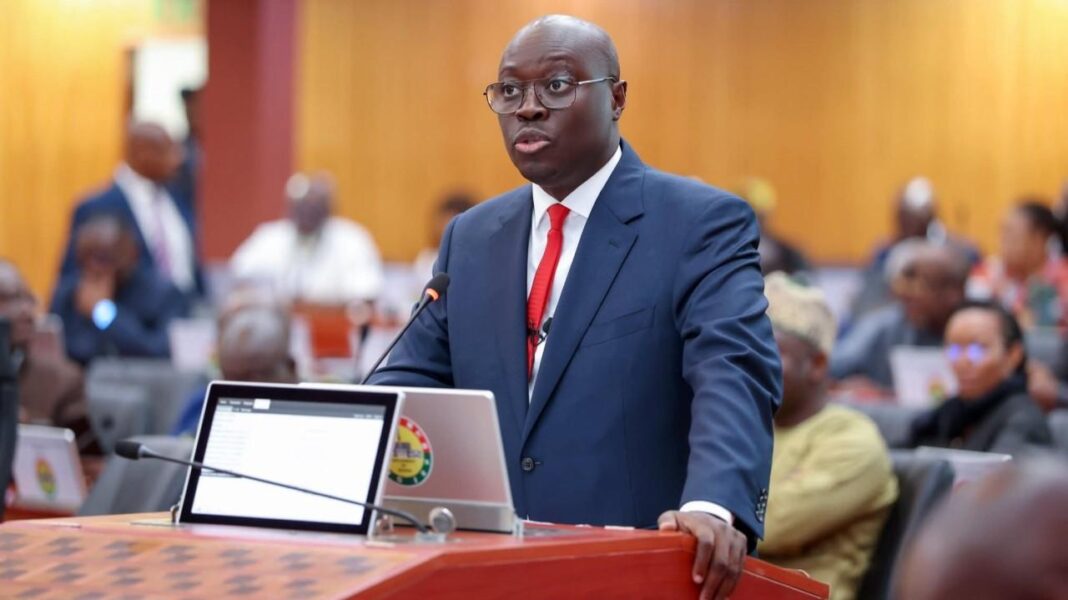

Finance Minister Dr Cassiel Ato Forson has delivered one of the clearest declarations yet of the Mahama administration’s economic strategy, affirming that his government will not sacrifice fiscal responsibility for political popularity as Ghana works toward completing its International Monetary Fund programme and safeguarding the country’s hard won economic recovery.
His remarks come at a defining moment in Ghana’s economic journey as the nation seeks to emerge from one of the most difficult financial crises in its democratic history. The debt restructuring programme, which imposed significant losses on domestic bondholders and reshaped Ghana’s financial landscape, exposed the severe consequences of prolonged fiscal imbalances, unsustainable borrowing and declining investor confidence. Against that background, the Finance Minister argued that maintaining budgetary discipline is no longer merely an economic preference but a national obligation that will determine whether Ghana secures lasting macroeconomic stability or risks returning to another cycle of financial turmoil.

Speaking during an interview on Joy News’ PM Express shortly after presenting the 2026 Mid Year Budget Review before Parliament on Thursday, Dr Forson defended the government’s measured expenditure programme, explaining that prudent financial management remains indispensable to ensuring Ghana successfully completes its International Monetary Fund supported economic reform programme.

The Finance Minister explained that the fiscal objectives currently guiding government policy were not independently established by the present administration but were inherited through the financing agreement negotiated between the previous administration led by former President Nana Addo Dankwa Akufo Addo and the International Monetary Fund. He noted that the former government secured a three billion dollar support package from the Fund while committing Ghana to maintain a primary fiscal surplus equivalent to one point five percent of Gross Domestic Product.

According to Dr Forson, the current administration is constitutionally and internationally bound to honour those commitments because international financial agreements are obligations undertaken by the Republic of Ghana rather than by individual political parties.
He observed that although political administrations may change following elections, contractual commitments entered into on behalf of the Ghanaian state remain legally binding. Consequently, he stressed that abandoning agreed programme conditions would seriously undermine Ghana’s international credibility while jeopardising confidence among development partners, investors and financial markets.

The Finance Minister further explained that Ghana’s adherence to the agreed fiscal benchmarks has already produced tangible results, strengthening confidence among the International Monetary Fund’s Executive Board and reinforcing the country’s prospects of successfully completing the programme. He disclosed that Ghana has already fulfilled all major programme requirements necessary for the country to move toward its anticipated exit from IMF financial support, reflecting the government’s determination to restore sustainable public finances.
Dr Forson revealed that government has already achieved a primary fiscal surplus equivalent to zero point nine percent of Gross Domestic Product during the first half of the fiscal year. Based upon current projections, he expressed confidence that the administration remains comfortably positioned to exceed the agreed annual objective before the close of the year, thereby preserving additional fiscal space for carefully targeted expenditure without compromising programme commitments.

Rejecting suggestions that the improved fiscal indicators merely reflected delayed government spending, the Finance Minister insisted that restrained expenditure is a deliberate and responsible policy decision designed to prevent another economic collapse. Responding to observations that government was simply limiting expenditure, he questioned whether critics genuinely expected the administration to disregard the IMF programme and repeat the mistakes that previously pushed Ghana into financial distress.

He argued that abandoning fiscal discipline would immediately threaten the progress achieved through painful economic reforms while increasing the possibility of renewed macroeconomic instability. In his assessment, returning to uncontrolled public expenditure would undermine investor confidence, weaken economic recovery and potentially force Ghana into another period of debt restructuring with severe consequences for households, businesses, pension funds and financial institutions.
Dr Forson maintained that President John Dramani Mahama’s administration remains fully committed to protecting the national economy from another financial crisis by pursuing responsible fiscal management, improving revenue mobilisation and maintaining disciplined expenditure throughout the remainder of the programme.
The Minister’s position carries considerable historical significance because it reflects an important shift in Ghana’s fiscal policy following years of mounting debt accumulation that culminated in the country’s request for International Monetary Fund assistance in 2022. The subsequent three billion dollar Extended Credit Facility became essential to stabilising the economy after Ghana experienced surging inflation, rapid currency depreciation, declining foreign reserves and restricted access to international capital markets. The programme also paved the way for extensive domestic and external debt restructuring, representing one of the most comprehensive sovereign debt operations in Ghana’s history. These reforms imposed substantial financial sacrifices upon investors, pension funds, financial institutions and ordinary citizens while laying the foundation for renewed macroeconomic stability.
Economic analysts broadly agree that maintaining fiscal discipline remains central to preserving recent gains. Ghana has recorded stronger economic growth, easing inflation compared with crisis levels and improved external reserve positions during implementation of the IMF programme. Nevertheless, economists continue to caution that these improvements will only prove durable if successive governments sustain prudent fiscal policies, strengthen domestic revenue mobilisation, broaden the tax base, improve expenditure efficiency and resist politically motivated spending that could reverse recent progress.
Dr Forson’s remarks therefore extend beyond defending the 2026 Mid Year Budget Review. They represent a broader commitment that the Mahama administration intends to preserve Ghana’s economic recovery through disciplined public financial management while rebuilding confidence among investors, international financial institutions and development partners. Whether the government ultimately succeeds in sustaining this trajectory will significantly influence Ghana’s economic outlook long after the International Monetary Fund programme concludes, shaping investor confidence, debt sustainability and national economic resilience for years to come.

