

GETFUND ALLOCATION MARKS MAJOR SHIFT IN GHANA’S DRIVE FOR EQUITABLE EDUCATION FOR PERSONS WITH DISABILITIES
The government has announced a major financial intervention aimed at transforming special needs education in Ghana, with the Ghana Education Trust Fund allocating GH¢100 million to support the implementation of free education for persons with special needs across the country.
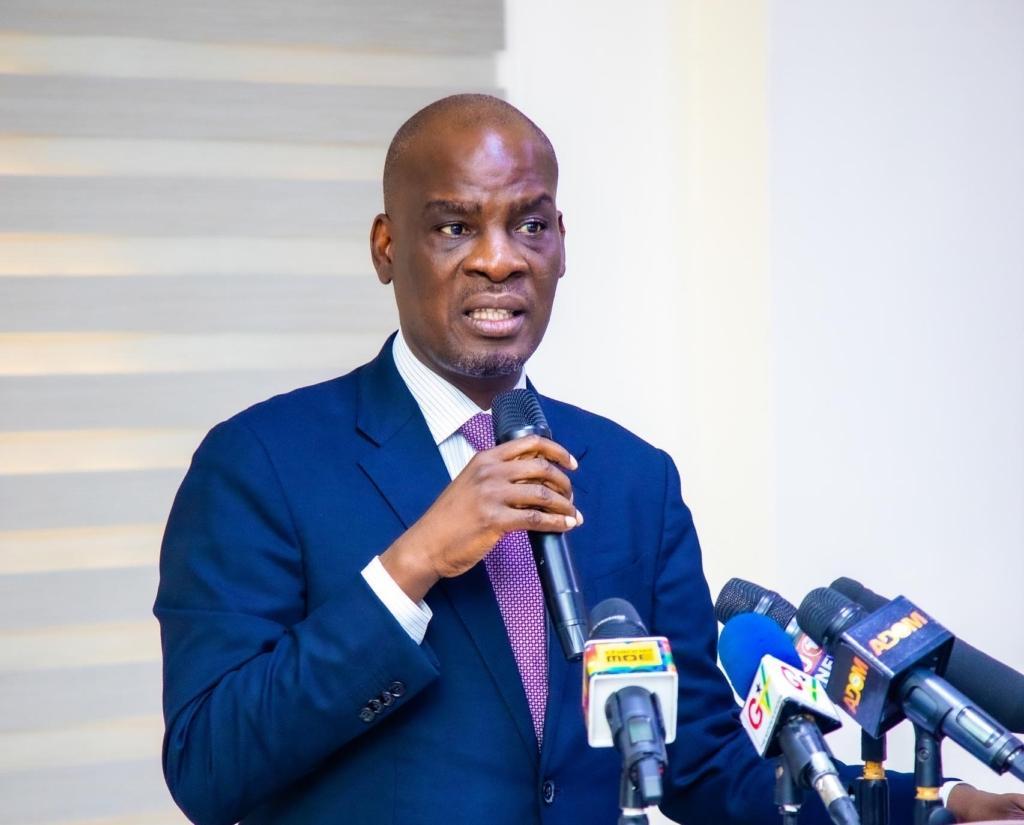
The announcement, made by the Minister for Education, Haruna Iddrisu, represents one of the most significant policy commitments towards inclusive education in Ghana’s recent educational history, as government seeks to remove financial barriers and improve access to quality learning opportunities for thousands of learners living with disabilities.

Speaking during the government’s Accountability Series on Monday, July 20, the Education Minister explained that the allocation followed amendments made to the Ghana Education Trust Fund Act, which introduced specific financial obligations aimed at strengthening support for vulnerable groups within the education sector.

According to Mr Iddrisu, the legislative changes were designed to guarantee sustainable funding for critical educational interventions, including the feeding component of the Free Senior High School programme as well as dedicated support for persons with disabilities.

“When the GETFund Amendment Act was presented before Parliament, it was to amend the GETFund Act. One was to dedicate the financing of Free Senior High School feeding to GETFund. The second was also to dedicate fees for persons with disabilities to GETFund,” he stated.
The Minister revealed that the amendment further established a yearly financial commitment requiring GETFund to support the provision of free education for persons with special needs, reinforcing government’s broader commitment to building an education system where every Ghanaian child, regardless of physical ability or learning challenges, has an equal opportunity to succeed.

“In that amendment was an amendment for GETFund to annually provide for the provision of free education for persons with special needs to keep them with our pledge as a government to promote inclusive and equitable education,” Mr Iddrisu explained.
He stressed that the government’s commitment to inclusive education would not remain limited to policy statements but would be supported by practical interventions designed to improve the daily learning experiences of students with disabilities.

The GH¢100 million allocation, according to the Minister, will provide essential resources required to support learners with special educational needs, including the procurement of assistive devices that will enable students with physical, visual, and hearing impairments to participate more effectively in academic activities.

“Accordingly, GETFund has allocated GH¢100 million to support the implementation of the free education for persons with special needs,” Mr Iddrisu announced.
He added that the intervention would mark a significant change after years of limited access to specialised learning materials and support equipment.
“For the first time in many years, assistive devices will be procured to support learners with difficulties across the country,” he stated.
The Minister further disclosed that government had begun preparations to rehabilitate major special education institutions across Ghana, including the School for the Blind in Akropong, the School for the Deaf in Savelugu, and another special needs institution located in the Upper West Region.
The planned rehabilitation programme is expected to address long standing infrastructure challenges affecting specialised schools and create safer, more suitable learning environments for students and teachers.
In addition to infrastructure improvements and educational support materials, government has also increased feeding grants allocated to students with special needs. The Minister announced that the feeding allowance has been increased from GH¢8 to GH¢15 per student, describing the adjustment as evidence of government’s commitment to improving welfare conditions within special education institutions.
“We have also, as a government, increased the feeding grants for students with special needs from GH¢8 to GH¢15, and we have walked the talk on this matter,” Mr Iddrisu said.
Beyond financial assistance, the Education Ministry is also working on developing specialised learning resources tailored to the unique requirements of students with disabilities. The Minister disclosed that new academic materials are being developed, including a Mathematics curriculum specifically designed for learners with visual impairment and a standardised sign language curriculum for hearing impaired students.
“We are developing a Mathematics curriculum for learners with visual impairment and developing a standardised sign language curriculum for hearing impaired learners in the country,” he stated.
The latest intervention comes at a time when advocates for disability inclusion have consistently called for stronger government action to address barriers affecting access to education for persons with special needs. Challenges such as inadequate infrastructure, limited learning materials, insufficient assistive technology, and financial difficulties have historically affected the ability of many learners with disabilities to fully participate in Ghana’s education system.
Education experts have long argued that inclusive education is not only a social responsibility but also a critical investment in national development, as empowering persons with disabilities through education improves employment opportunities, economic independence, and social participation.
The GH¢100 million GETFund commitment therefore represents more than a financial allocation. It signals a broader policy shift towards recognising education as a universal right and ensuring that disability does not become a barrier to academic achievement.
As the government moves forward with the implementation of the initiative, attention will focus on the effective distribution of resources, completion of rehabilitation projects, availability of assistive devices, and the overall impact of the programme on learners with special needs nationwide.
The success of the initiative could become a defining milestone in Ghana’s journey towards creating a more inclusive education system where every learner, regardless of ability, receives the opportunity to reach their full potential.

