
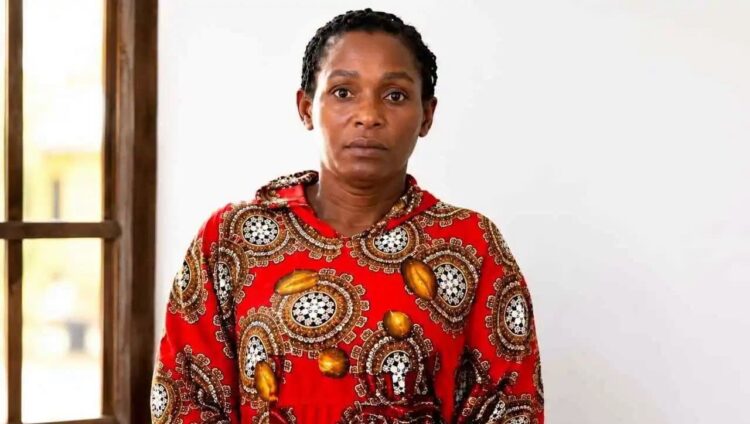

The Accra Circuit Court has delivered a landmark judgment in one of Ghana’s most closely watched social media misinformation prosecutions, sentencing TikTok content creator Camilla Alhassan to one year in prison after she admitted to publishing false information and engaging in offensive conduct through videos containing serious allegations against President John Dramani Mahama.
The conviction marks a significant moment in Ghana’s evolving legal response to digital misinformation and demonstrates the Judiciary’s determination to enforce laws governing the responsible use of social media platforms. Legal analysts believe the ruling could become an important reference point for future prosecutions involving the deliberate dissemination of false information capable of damaging reputations, undermining public confidence and threatening national cohesion.

Forty three year old Camilla Alhassan was convicted after pleading guilty to all the charges brought against her by state prosecutors. The charges arose from a series of videos she published on TikTok in which she falsely claimed that President Mahama had performed ritual sacrifices involving thirty two cows to secure victory in the 2024 general election. Investigators told the court that the allegations were entirely fabricated and unsupported by any credible evidence.

The court imposed the custodial sentence on Thursday following her admission of guilt, bringing an end to proceedings that attracted widespread public attention because of the nature of the allegations and the growing national debate surrounding misinformation on digital platforms.

Before the sentence was pronounced, the court had ordered that Alhassan be remanded into lawful custody and directed that she undergo a pregnancy examination to determine whether there were any legal considerations affecting the execution of a custodial sentence. Following the completion of that process, the court proceeded to impose the one year term of imprisonment.
According to the prosecution, the offences were committed through several videos uploaded between late June and early July. In those recordings, Alhassan alleged that President Mahama had resorted to ritual practices as a means of attaining political power. Prosecutors argued that the statements were knowingly false, lacked factual foundation and were capable of misleading members of the public.

The prosecution further informed the court that Alhassan expanded the allegations by claiming that the government’s distribution of sanitary pads to victims affected by the devastating June twenty nine floods formed part of an elaborate effort to conceal the alleged rituals. Investigators established that those assertions were equally baseless and entirely unsupported by any verifiable evidence.
By pleading guilty to every count, the accused effectively accepted responsibility for disseminating false information that prosecutors argued had the potential to damage individual reputation, distort public discourse and erode confidence in public institutions.

The case carries importance far beyond the conviction of a single content creator. It represents one of the clearest demonstrations yet of Ghana’s willingness to apply existing criminal laws to the rapidly expanding digital media environment, where misinformation, fabricated narratives and defamatory content can spread to millions of users within minutes. As social media increasingly shapes political discussion, public opinion and national conversations, the Judiciary continues to confront complex questions concerning freedom of expression, responsible communication and the legal consequences of deliberately publishing falsehoods.

Legal experts have consistently maintained that while Ghana’s Constitution robustly protects freedom of speech and freedom of the press, those constitutional rights are accompanied by corresponding responsibilities. The law does not shield individuals who intentionally publish false statements that harm the reputation of others, undermine public order or constitute criminal offences under existing legislation. Courts have repeatedly affirmed that constitutional liberties must be exercised within the limits established by law to safeguard the rights of others and preserve public confidence in democratic institutions.
Historically, the judgment reflects the growing transformation of Ghana’s justice system in addressing offences committed through digital technology rather than traditional media. As social media platforms continue to influence political communication, electoral discourse and public engagement, law enforcement agencies and the courts are increasingly required to balance the protection of free expression with the need to curb the deliberate spread of false information capable of inciting public disorder or causing reputational injury.
The conviction of Camilla Alhassan therefore stands as a defining moment in Ghana’s developing body of digital jurisprudence. It sends a clear signal that while social media has expanded opportunities for public participation and democratic engagement, those platforms do not exist outside the reach of the law. The ruling reinforces the principle that individuals who knowingly circulate false and defamatory claims, particularly against public office holders or institutions without credible evidence, may face significant criminal consequences. As Ghana continues to navigate the opportunities and challenges presented by the digital age, the decision is likely to serve as an influential judicial precedent in future cases involving misinformation, online accountability and responsible digital communication.

