
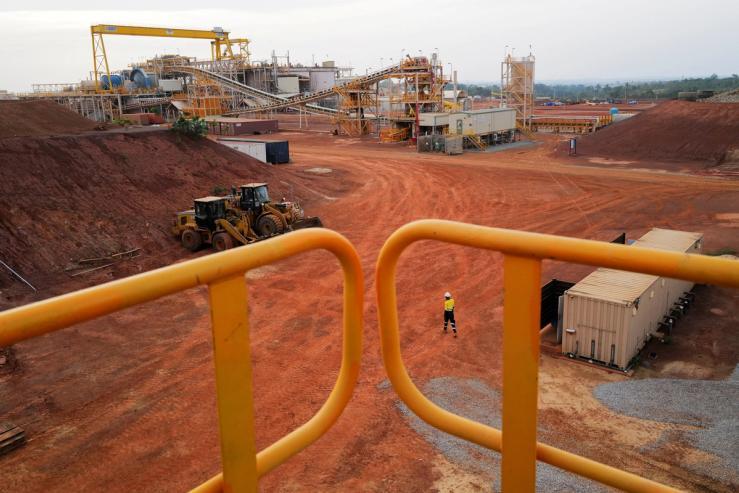

In a landmark policy shift that could redefine the future of Ghana’s mineral economy and strengthen the country’s financial sovereignty for decades to come, the Government of Ghana has concluded a historic agreement with major large scale mining companies to acquire 30 percent of their gold production beginning July 1, 2026. The arrangement, implemented through the Ghana Gold Board, popularly known as GoldBod, represents one of the most ambitious resource retention and reserve accumulation strategies undertaken by any African nation in recent history.
The agreement marks a significant departure from Ghana’s traditional role as a producer and exporter of raw minerals by placing the state at the center of a strategic effort to retain greater value from its most important natural resource. Under the terms of the new arrangement, all large scale mining companies operating in Ghana, including international mining giants such as Newmont Corporation, Gold Fields and Zijin Mining Group, will sell 30 percent of their gold output in doré form directly to GoldBod. These purchases will be conducted in Ghana cedis using the official reference rate established by the Bank of Ghana, with a negotiated discount of 0.55 percent.

The significance of this policy extends far beyond the immediate acquisition of gold reserves. At a time when central banks across the world are rapidly increasing their bullion holdings amid growing uncertainty in international financial markets, Ghana is positioning itself to benefit from a historic resurgence in the strategic importance of gold. Global central banks have accumulated record quantities of gold in recent years as governments seek alternatives to traditional foreign exchange reserves and protection against inflationary pressures, currency volatility and geopolitical instability.

For Ghana, Africa’s leading gold producer, the decision represents a profound transformation in economic thinking. Historically, many resource rich African nations exported raw minerals while retaining relatively modest strategic reserves. Ghana’s new approach seeks to reverse this pattern by building substantial domestic gold holdings capable of supporting currency stability, strengthening international reserves and enhancing resilience against external economic shocks.

The country’s journey toward strategic gold accumulation began in 2022 when authorities introduced a policy requiring mining companies to allocate 20 percent of annual production to the central bank. Since then, Ghana’s official gold reserves have expanded significantly, reaching approximately 19.2 metric tonnes by early 2026. The newly expanded programme aims to increase those reserves dramatically to as much as 157 metric tonnes by 2028, equivalent to approximately fifteen months of import cover under the Ghana Accelerated National Reserve Accumulation Programme.
The broader strategic vision underpinning the initiative is perhaps even more consequential. Rather than merely purchasing gold and exporting it for processing abroad, Ghana intends to establish a robust domestic refining industry capable of meeting the stringent standards of the London Bullion Market Association. Government officials have set an ambitious target of securing international accreditation for at least one Ghanaian refinery by 2030, thereby allowing the country to capture a much greater share of the value chain associated with gold production and refining.

Under the framework established by the agreement, gold acquired by GoldBod will first undergo refining within Ghana before being transferred to internationally accredited refineries for final certification, melting and stamping. This process is intended not only to increase domestic value retention but also to facilitate technological transfer, industrial development and employment creation within Ghana’s refining sector.
The historical significance of this development cannot be overstated. Since the colonial era, Ghana’s mineral wealth has largely been extracted and processed externally, with substantial portions of the value generated accruing outside the country. The current initiative represents one of the strongest attempts in Ghana’s post independence history to restructure the relationship between natural resource extraction and national economic development. The policy aligns closely with President John Dramani Mahama‘s broader vision of eliminating raw mineral exports and maximizing domestic industrialization by the end of the decade.

Economic analysts suggest that the programme could produce several long term benefits. Larger gold reserves may strengthen confidence in the Ghanaian cedi, improve the country’s creditworthiness, reduce dependence on external borrowing and provide an additional buffer during periods of international financial turbulence. Furthermore, expanding domestic refining capacity could stimulate industrial investment, technological advancement and specialized employment opportunities within Ghana’s extractive sector.

Nevertheless, the programme will also face important tests. Successfully managing a rapidly expanding strategic reserve programme requires strong institutional oversight, transparent governance structures and sustained collaboration between government agencies and international mining companies. Market fluctuations, operational costs and the technical demands associated with achieving international refinery accreditation will all present significant challenges in the years ahead.
Yet despite these challenges, Ghana’s decision to secure direct access to nearly one third of all large scale gold production represents a pivotal moment in the country’s economic history. As global competition for strategic resources intensifies and central banks increasingly return to gold as a cornerstone reserve asset, Ghana is undertaking a bold experiment in economic sovereignty that could ultimately reshape not only its own financial future but also influence how other resource rich African nations approach the management of their natural wealth.

