

SOURCE: CNN
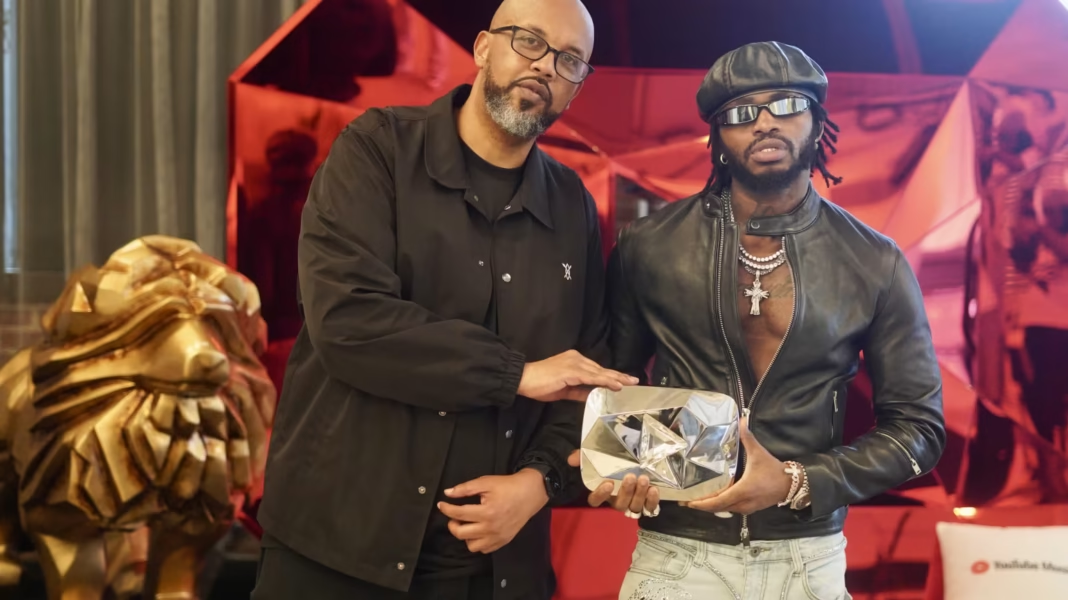
Tuma Basa (left) YouTube’s former director of Black music and culture with Tananzian Bongo Flava artist Diamond Platnumz.

Courtesy Tuma Basa

When people say African music is having a “global moment,” they are often talking about only a small part of the continent.

“Nigeria and South Africa are dominating the most,” said Tuma Basa, YouTube’s former director of Black music culture, who recently announced his departure after eight years at the company.
Afrobeats and Amapiano — South African electronic dance music — are elevating African music worldwide, but the continent’s global presence is still concentrated in only a few countries, despite rich diversity across 50-plus nations.

For Basa, the reasons are both cultural and structural.
“Firstly, they are all English-speaking and right now that still makes a difference in terms of international acceptance of music,” said Basa, referring to Nigeria, South Africa, and Ghana.

Diaspora communities have also played a major role in exporting African sounds internationally.

Addy Awofisayo, Baba Kuboye, Kunle Kuti, Temitope Kuti, Femi Kuti, Yeni Kuti, Shalewa Kuti, Rikki Stein, Milicent Kuti and Tuma Basa came together for YouTube’s PAMOJA: Celebration of African Music and Culture at The Preserve LA in Los Angeles.
Gonzalo Marroquin/Getty Images for YouTube Music
“Strong diasporas of Nigeria and Ghana are key in getting this music popular,” Basa said.
“South Africa doesn’t have as large diaspora, but their dances spread through social media like wildfire.”
Events in Lagos and Accra, such as “Detty December” and Ghana’s “Year of Return” initiative, have attracted African American and Black British visitors, further accelerating exposure. These visitors often bring the music back to the United States and the United Kingdom, expanding its international reach.
Still, Basa believes much of Africa remains overlooked, noting that many regions and genres receive little to no attention in the global music industry.
“Yes, some regions are being left out of the global conversation,” he said. “But that will change as technology continues to level the playing field.”
Basa highlighted the growing accessibility of tools for music-making and distribution. Cheaper production technology, social media, and global streaming platforms are reducing traditional gatekeeping that once limited artists from emerging markets. Still, he stressed that technology alone is not enough; local infrastructure, licensing systems, and African decision-makers are needed to support artists globally.
Basa knows firsthand what it means to move between worlds.
Born in the Democratic Republic of the Congo to Rwandan parents, raised partly in Zimbabwe and educated in the United States, he describes himself as a “perpetual foreigner.”
“It forced me to empathize,” Basa said. “It forced me to become interculturally competent.”
That perspective would later shape his work at MTV, Spotify, and YouTube, where he became one of the most influential curators in global Black music.
At Spotify, Basa helped build RapCaviar into one of streaming’s most influential hip-hop playlists, helping shape the careers of major artists while also pushing African and diaspora sounds to wider audiences.
Despite the industry’s obsession with algorithms, Basa says there is no real shortcut to sustainable success.
“There are definitely growth hacks that exist,” he said. “Gaming the system is what backfires.”
Instead, he believes that consistency and collaboration remain among the most effective tools for artists trying to build momentum.
“When artists collaborate, they tap into the audience of the other artists,” Basa explained.
“Consistency builds relationships with the audience. They know you’ll always be there.”
Algorithms are only one part of the discovery ecosystem. Basa says human curation, licensing agreements, and commercial partnerships influence what audiences hear on streaming platforms. Playlist editors, label executives, curators, advertisers, and media gatekeepers determine which songs and artists are prioritized.

