
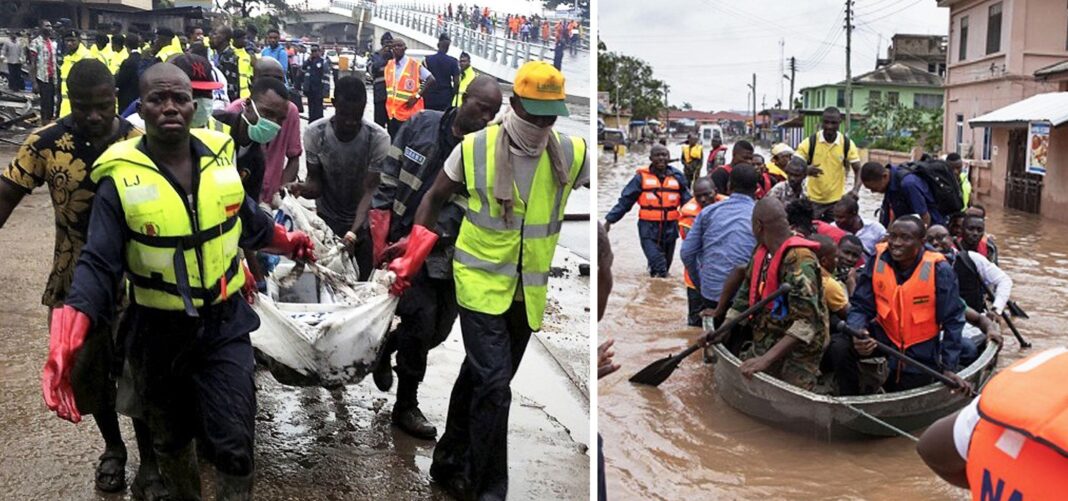

The Greater Accra Regional Director of the National Disaster Management Organisation NADMO, Dennis Nartey Ajannor, has identified the indiscriminate dumping of waste into drainage systems as a major contributing factor to recurring flooding in parts of Accra during periods of heavy rainfall.
He explained that a significant number of residents continue to dispose of refuse directly into gutters and drainage channels, a practice that blocks water flow pathways and causes them to overflow during rainstorms, ultimately resulting in floodwaters entering homes and surrounding communities.

Speaking on Citi Eyewitness News on Tuesday, May 26, Mr. Ajannor noted that blocked culverts and obstructed downstream drainage channels remain a persistent challenge, stressing that once water cannot flow freely, it inevitably diverts into residential areas.

He further described the situation as largely driven by behavioural and attitudinal factors, calling for stronger public cooperation and urging the media to intensify education campaigns aimed at changing public habits regarding waste disposal.

According to him, although flooding continues to affect several communities within the capital, NADMO has already implemented what he described as robust preparedness measures ahead of the rainy season to reduce the impact of potential disasters.
He indicated that the organisation has strengthened its systems for prevention, response, and post flood recovery, adding that emergency structures have been activated to ensure rapid intervention whenever incidents occur.

Mr. Ajannor also disclosed that NADMO has activated emergency operation centres across the country as part of a broader response strategy to address flooding triggered by the ongoing heavy rains, which have already led to submerged homes and property damage in parts of the capital.
The decentralised emergency system, he explained, is designed to improve coordination and enable swift deployment of response teams to affected areas, particularly in flood prone communities.

He added that emergency teams have been placed on standby and are equipped to support evacuations, assist affected residents, and carry out water removal operations where necessary to mitigate the impact of flooding.


