
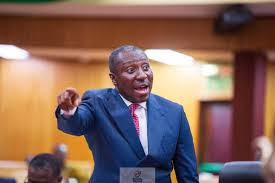

Paper Promises, No Jobs Minority Leader Slams NDC Over Soaring Youth Unemployment
The Minority in Parliament has launched a sharp attack on the governing National Democratic Congress (NDC), accusing the government of failing to translate its policy promises into real jobs for Ghana’s growing youth population.

Addressing a press briefing on Monday, 3 February, Minority Leader Alexander Afenyo-Markin described the country’s youth unemployment situation as deeply troubling, citing reports that place the figure at about 34 per cent. He questioned how such numbers could persist in the face of what he said were numerous job-creation pledges made by the government.

According to him, the unemployment rate exposes a widening gap between government rhetoric and reality. He challenged the NDC to account for the jobs it promised, asking pointedly where those opportunities are after two years in office.

Mr Afenyo-Markin was particularly critical of several flagship government initiatives, arguing that they exist more as announcements than as impactful programmes. He mentioned initiatives such as Adwuma Wura, the National Apprenticeship Programme and Nkoko Nkitinkiti, describing them as largely “paper programmes” with little evidence of meaningful outcomes on the ground. In his view, any benefits from these initiatives are minimal and insufficient to address the scale of unemployment facing young people.
He further suggested that the government could no longer rely on goodwill or excuses, noting that the administration is now in its second year and that what he termed the “honeymoon period” is over.

The Minority Leader also expressed concern over the cancellation of the One District, One Factory (1D1F) policy, warning that its removal has left a vacuum in private-sector-led industrial growth. He argued that the absence of a clear replacement programme is worrying, especially as he claimed there has been no major private sector initiative announced by the Minister of Trade and Industry to stimulate economic growth and job creation.
On public sector reforms, Mr Afenyo-Markin questioned whether the government is serious about its own commitments. He said there has been little visibility or activity from the ministry responsible for public sector reform, adding that even the national budget failed to outline any significant reforms or interventions. To him, this silence suggests that the promised reforms exist only in name.

He concluded by urging the government to move away from what he called “paper promises” and focus on delivering concrete, measurable results. Stressing the urgency of the situation, he warned that continued inaction could deepen frustration among unemployed young Ghanaians, who are increasingly demanding real opportunities rather than policy slogans.


