
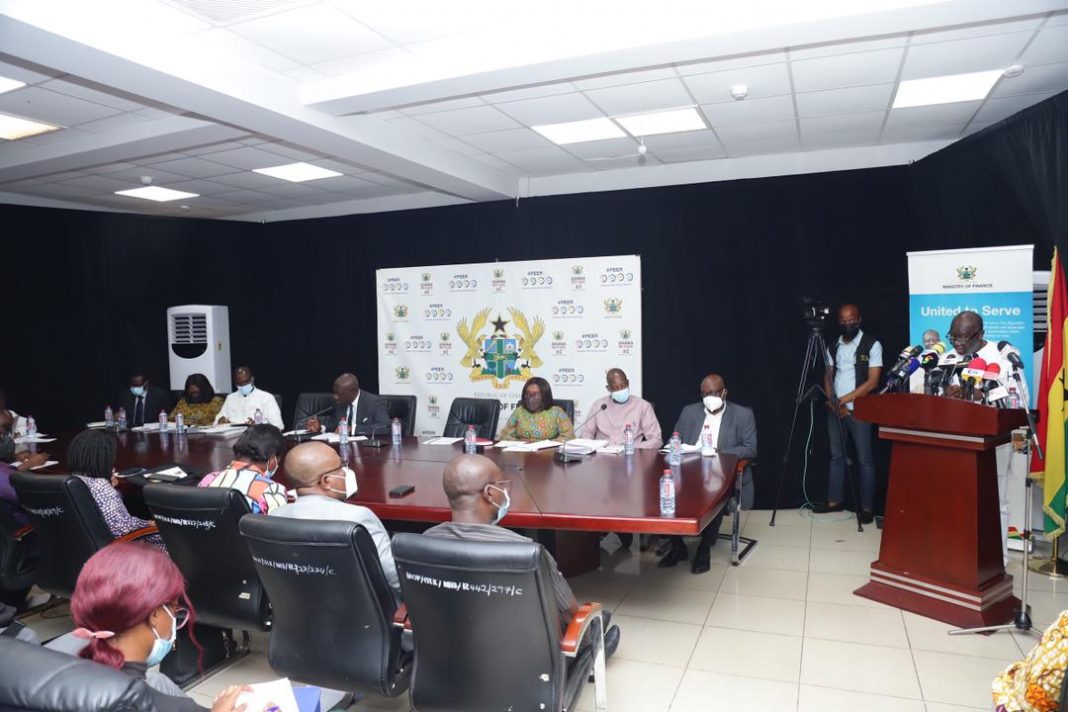

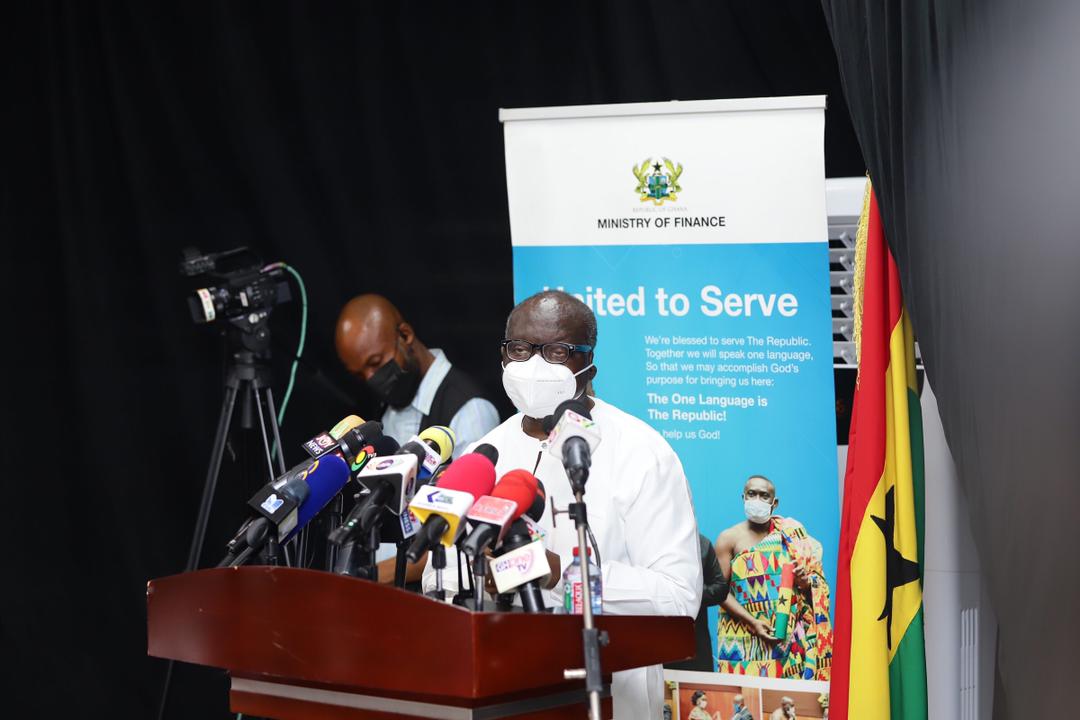
The Minister of Finance Ken Ofori Atta has set out a series of exciting measures being undertaken by the government in an effort to reign back the economy and get it back on track.
Among the measures are spending cuts, effective Expenditure Monitoring, fuel coupon allocations, complete moratorium on the purchase of imported vehicles, and moratorium on all foreign travels.

Overall, the measures are in three groups comprising group one (expenditure cutting measures), group two (fuel price mitigation measures), group three (revenue measures), and group 4 (financing and currency measures).

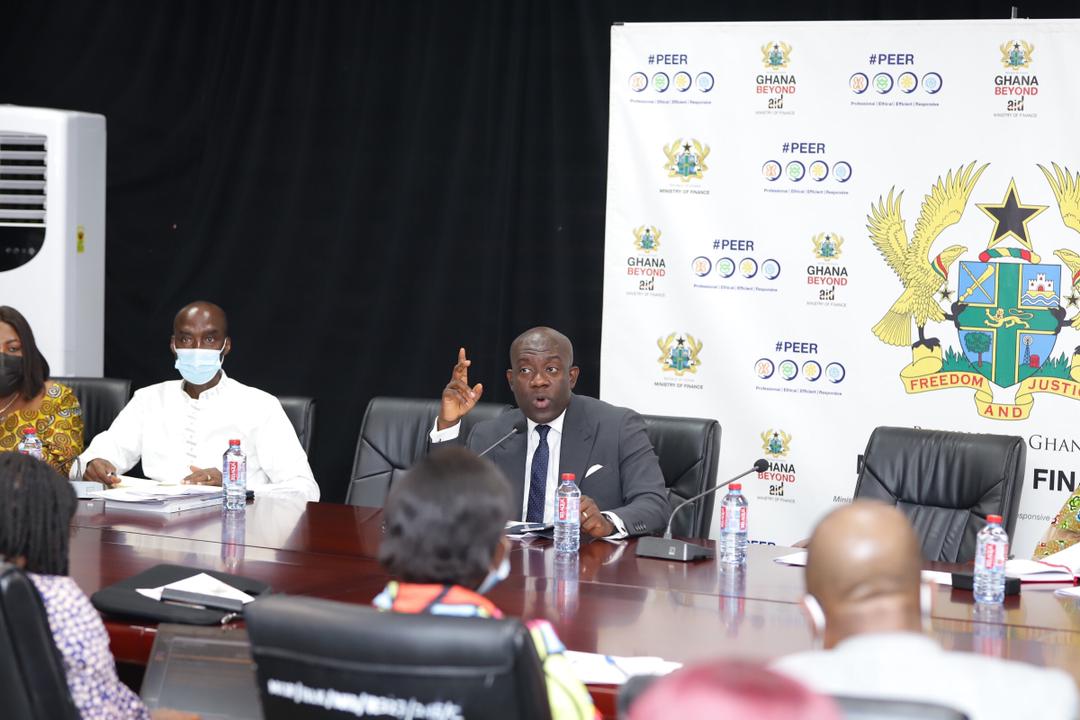
Addressing a major press conference yesterday on measures to reign in expenditure, Mr. Ofori Atta, the Finance Minister, stated that Government has already started the New Year with spending cuts as Parliament failed to approve key revenue streams at the appropriate time. He stated that in January 2022, Government announced and, immediately, began implementing a 20% expenditure cut as part of fiscal stabilisation and debt sustainability measures.

“This has been done through the quarterly expenditure ceiling allotments to MDAs. Quarter 1 allotment is currently under implementation whiles Q2 allotments will be issued shortly. The ministry has strengthened its Expenditure Monitoring systems and processes to ensure effective implementation of these measures,” Mr Ofori Atta stated.
In the meantime, he announced that President Nana Addo Dankwa Akufo-Addo has absolutely no intention to roll back on a major policy like Free SHS.

“We see education as the best enabler for sustainable economic growth and transformation and will do more to improve on it for it to serve more and better our children.
He noted that in addition, Government has decided to take several measures to ensure the achievement of the fiscal deficit target of 7.4% of GDP for 2022.

The group one measures are as follows;

Discretionary spending; Discretionary spending is to be further cut by an additional 10%. The Ministry of Finance is currently meeting with MDAs to review their spending plans for the rest of the three (3) quarters to achieve the discretionary expenditure cuts;
50% cut in fuel coupon allocations; these times call for very efficient use of energy resources. In line with this, there will be a 50% cut in fuel coupon allocations for all political appointees and Heads of government institutions, including SOEs, effective 1st April 2022;
Complete moratorium on the purchase of imported vehicles and 4-Wheel Drives; with immediate effect, Government has imposed a complete moratorium on the purchase of imported vehicles for the rest of the year. This will affect all new orders, especially 4-wheel drives. We will ensure that the overall effect is to reduce total vehicle purchases by the public sector by at least 50 percent for the period;
Moratorium on all foreign travels; again, with immediate effect Government has imposed a moratorium on all foreign travels, except pre-approved critical/statutory travels;
Elimination of “ghost” workers from the Government payroll; Government will conclude on-going measures to eliminate “ghost” workers from the Government payroll by end December 2022;
Renegotiation of the Energy Sector IPPs capacity charges; Government will conclude the renegotiation of the Energy Sector IPPs capacity charges by end of Q3-2022 to further reduce excess capacity payments by 20% to generate a total savings of GHS1.5 billion;
Impose a moratorium on establishment of new public sector institutions; impose a moratorium on establishment of new public sector institutions by end April, 2022;
Prioritise ongoing public projects over new projects. This is to enhance the efficient use of limited public funds over the period by finishing ongoing or stalled but approved projects;
Reduce expenditure on all meetings and conferences by 50%, effective immediately;
Ministers and the Heads of SOEs to contribute 30 percent; Finally, Cabinet approved that Ministers and the Heads of SOEs to contribute 30 percent of their salaries from April to December 2022 to the Consolidated Fund; We would like to thank the Council of State in their leadership in complimenting the Government on this policy.
Pursue a comprehensive re-profiling strategies to reduce the interest expense burden on the fiscal; and
liaise with Organised Labour and Employers Association to implement with immediate effect, the measures captured in the Kwahu Declaration of the 2022 National Labour Conference, including reforms towards addressing salary inequities / inequalities (e.g. Article 71 Office Holders), the weak link between pay to productivity and the sustainability of the payroll.
The Group Two Measures, which as the Fuel Price Mitigation Measures. On these measures, the Finance Minister stated, “Ladies and gentlemen, the rising prices of fuel at the pumps is influenced largely by the rising crude oil prices on the international market and the exchange rate depreciation. Though the rise in crude oil prices should have been to our benefit on net basis, Ghana’s import of petroleum products amounts to 5.2 times the value of the proceeds from its crude oil exports. In 2022, we exported $3,947.70 million of which Ghana’s portion was $513 million. However, we imported $2,719.00 of crude oil and finished products. The purported windfall gain in foreign exchange is a mirage. From January to date, the average ex-pump price of diesel and petrol have increased by 57% and 45% respectively.
“Unlike in other countries where the hike in crude oil prices and exchange rate volatility are leading to shortages in supply of petroleum products, government is implementing measures to guarantee constant supply of petroleum products. To mitigate the impact of the rising price of petroleum products at the pump, for the next three months, government has decided to reduce margins in the petroleum price build-up by a total of 15 pesewas per litre with effect from 1st April,” he said.
The details are as follows:
BOST margin reduced by 2 pesewas per litre
Unified Petroleum Pricing Fund (UPPF) margin reduced by 9 pesewas per litre
iii. Fuel Marking Margin (FMM) reduced by 1 pesewa per litre iv. Primary Distribution Margin (PDM) reduced by 3 pesewas per litre.
He said that these reductions in margins are expected to reduce prices of petrol by 1.6% and diesel by 1.4%. We anticipate that the measures taken to strengthen the currency will help further stabilize the prices at the pump. Additionally, the NPA is in discussion with the OMCs to reduce their margins within the spirit of burden-sharing.
“The Government will do all it can to ensure consistent supply of fuel and manage the rate of ex-pump price increase by ensuring that BoG has access to adequate foreign exchange,” he said.
Revenue Measures
He stated that cutting down on expenditures alone will not be enough.
“Our focus is therefore twofold: to control expenditure and to raise more revenues domestically. As such, we will, therefore:
- Begin the implementation and collection of the revised Property Rate by end of April 2022;
- implement the E-VAT/E-Commerce/E-Gaming initiatives by end of April 2022;
iii. roll out the simplified tax filing mobile application for all eligible taxpayers by July 2022;
- impress upon Parliament to fast track the passage of the E-Levy Bill, Tax Exemptions Bill, and Fees and Charges Bill;
- prioritise the Revenue Assurance, Compliance, and Enforcement (RACE) Programme to plug revenue leakages especially at the ports and the infamous fuel bunkering and small scale mining exporters cabal;
- government will partner the private sector to introduce digital systems to monitor quarrying, sand winning and salt winning to get more revenues from our natural resources; and
vii. immediately enforce the “No Duty – No Exit” policy at the MPS Terminal at the Tema Port to improve revenue collection.
Financing and Currency Measures
- GoG to conclude external financing arrangement of up to US$2 billion in the next 2-6 weeks in line with approved external financing for 2022 and for liability management;
- MoF will work with the Central Bank to review the foreign exchange retention policy to ensure multinational companies in the extractive sectors retain foreign exchange earnings, from the sale of our resources, in the country.
Additionally, the following measures will be implemented over the medium-term:
- Wean-off public tertiary institutions from government payroll and provide them with a fixed amount “block grant” instead.
- Pursue reforms to address structural challenges in public financial management including procurement and commitment control, payroll management and human resource management.
(The Daily Searchlight appears every day on the newsstands and for sale 24 hours every day and all week on www.ghananewsstand.com. Visit www.ghananewsstand.com for a wide variety of newspapers published in Ghana and from across the world.)

